

The idea
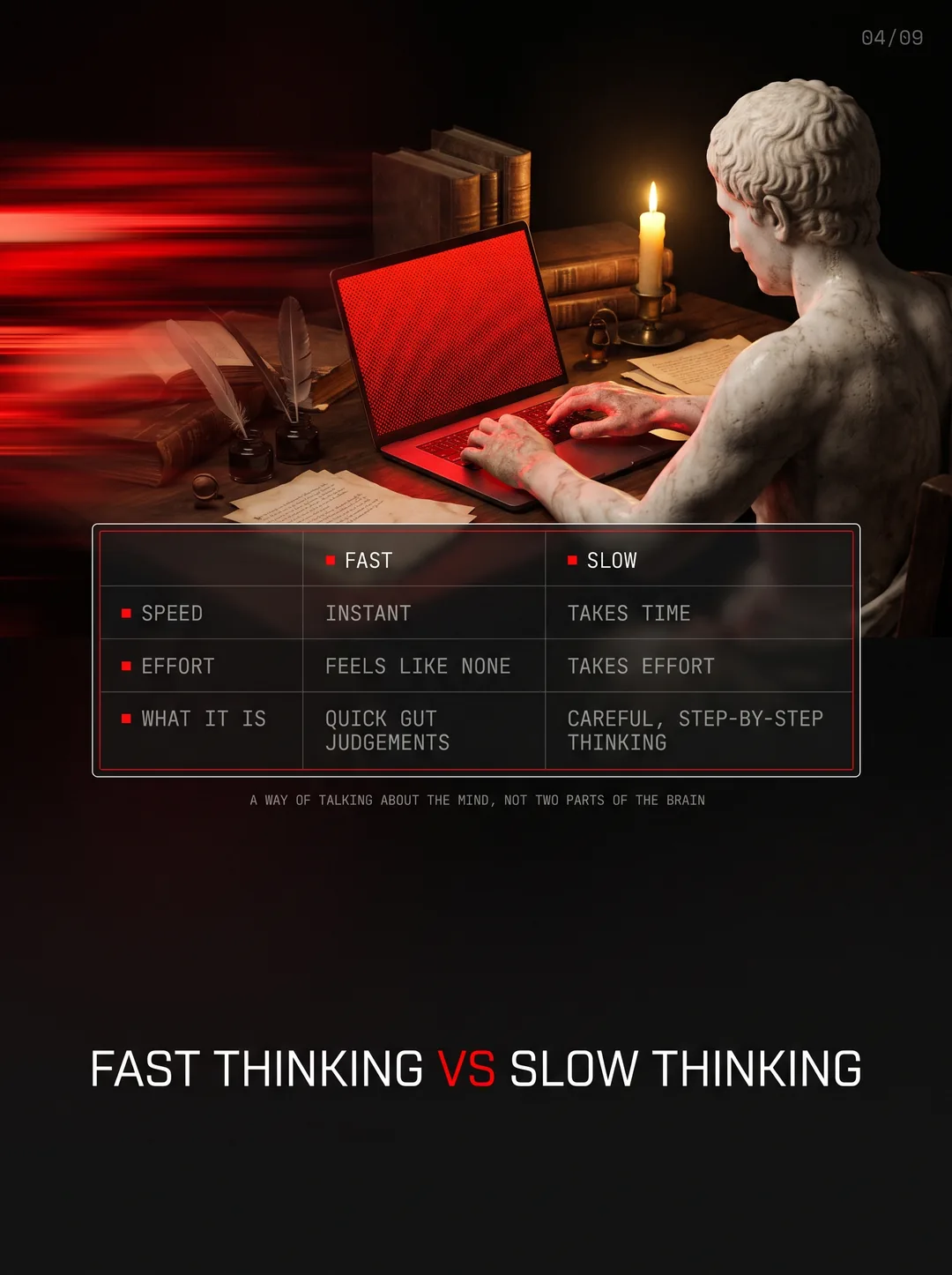
Your mind has two speeds. One is fast and automatic, and gives you quick gut judgements. The other is slow and careful, and takes effort. It's a way of talking about the mind, not two parts of the brain.
When a question is hard, your mind quite often answers an easier one instead, usually without you noticing. It's one of the shortcuts your mind takes.
Here's an example. A man whose job was investing money bought shares in a car company. He bought them because he liked its cars. But liking the cars said nothing about whether the shares were worth the price.
So is a gut feeling usually wrong? Not always. A quick judgement can be trusted when you've learned to spot familiar patterns in that kind of situation. A confident feeling with no such learning behind it isn't the same thing.
Want the research, names and dates? They are in Go deeper, at the end.

Picture it
Think of your mind as a busy assistant. When you hand it a hard job, it sometimes does an easier one instead. Then it hands back the easy job as the one you asked for. It isn't lying. It just doesn't tell you about the swap.
For a child: A teacher asks, 'Did you finish your homework?' You think of the one page you did, and say 'Yes!' You answered an easier question without noticing.
A second look, saved for when it counts.
How it applies
It comes down to four small moves. Spotting a quick judgement is the first. Then come naming the hard question, and naming the easier one that was answered. Last is judging whether a second look is worth it. Most of your quick answers are good enough. A second look matters when the hard question matters to you.

Where you’ll see it
- At work: "Is this plan sound?" can quietly turn into "Do I like the person presenting it?"
- Online: "Is this review reliable?" can quietly turn into "Does it sound confident?"
- At home: "Is this the right choice for us?" can quietly turn into "Is this what we usually do?"
Signs it’s happening
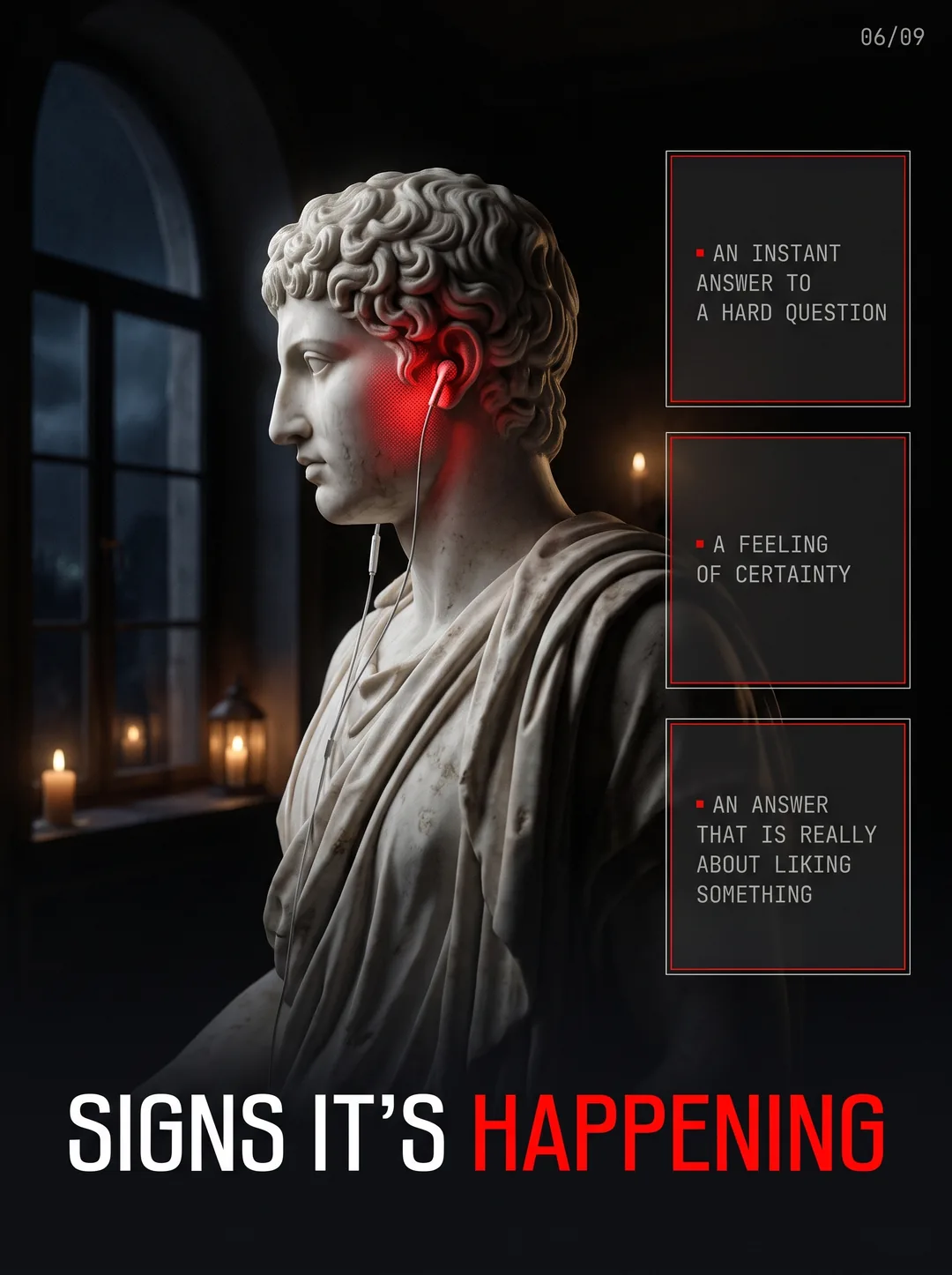
- A hard question gets an instant answer, and it feels certain.
- Your answer is really about a feeling, like liking something or finding it familiar.
- You read familiar numbers or words the usual way, without checking.

Before and after
Two job offers on the table.
"Which one feels more exciting?" You answer it at once, and the exciting one wins.
"Which one fits the work, the pay and the life you want?" That takes longer, and the slower question may point to the other offer.
A story from history: Napoleon's height
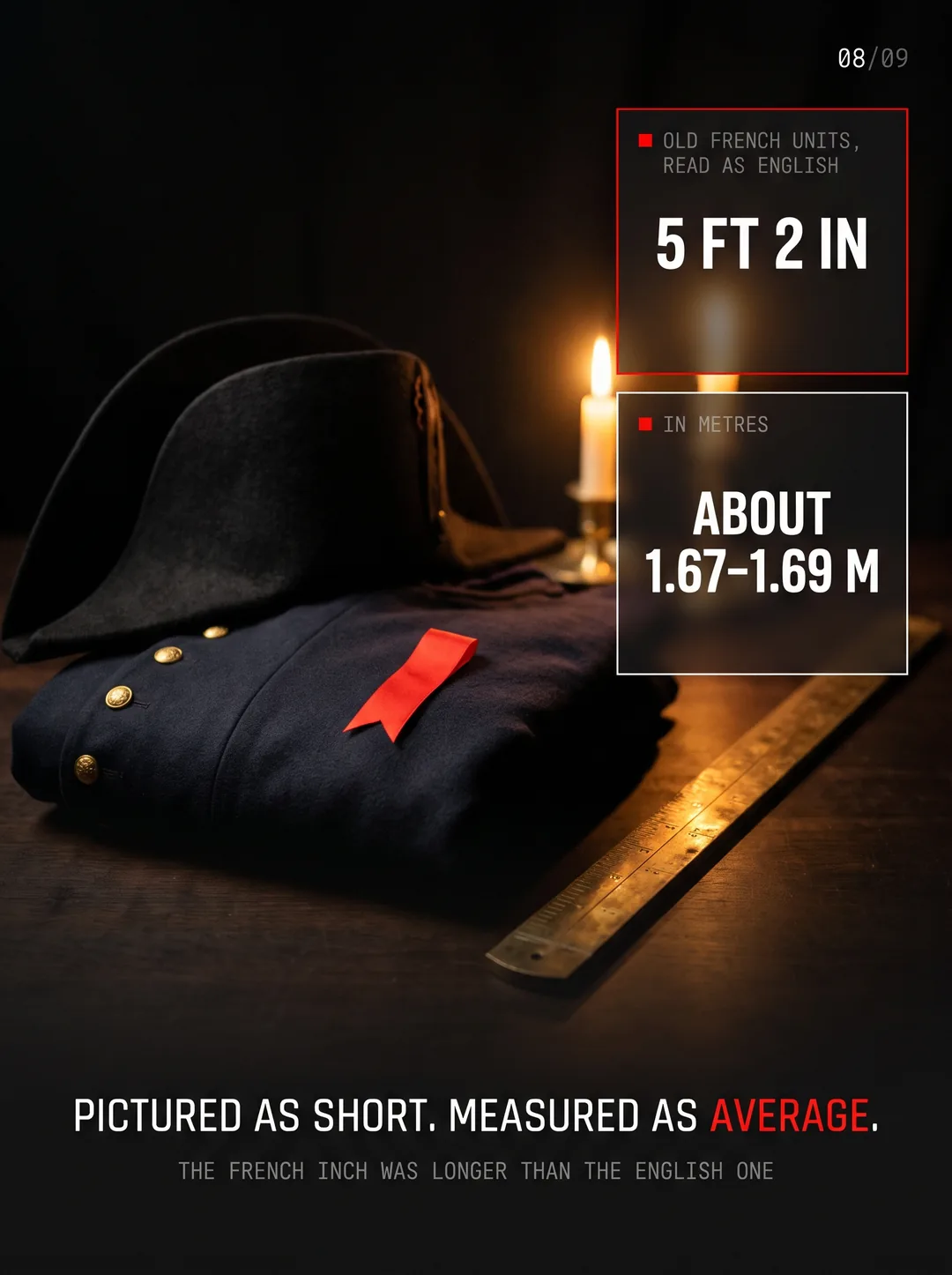
- Napoleon is often pictured as a very short man.
- His doctor wrote his height in old French units: five pieds, two pouces and four lignes (a smaller unit).
- The French inch, the pouce, was longer than the English one: 2.7 cm against 2.54 cm.
- Read as English feet and inches, the same numbers sound like 5 ft 2 in. British cartoons of the time drew him tiny.
- In metres he was about 1.67 to 1.69 m, about average for a Frenchman of his time.
The numbers looked familiar, so they were read in familiar units. "How tall was he?" quietly became "What do these numbers usually mean?"
Quick check3 questions · nothing is saved
1. Your mind has two speeds. What is the fast one like?
2. In the example, why did the man buy shares in the car company?
3. Of the four small moves, which one comes first?

One question worth keeping.
In one line
Your mind swaps hard questions for easy ones. The question worth keeping: did I answer the real question, or an easier one?
Which hard question have you answered quickly lately, and what easier question might you have answered instead?
Go deeperThe research, names and dates
Where this comes from
The psychologist Daniel Kahneman describes two ways of thinking in his book Thinking, Fast and Slow. System 1 is fast and automatic: quick, intuitive judgements. System 2 is slow and takes effort: careful, deliberate thinking.
One of the book's big ideas is that when a question is hard, we often answer an easier one instead. We usually don't notice the swap. The book calls this substitution. Quick rules of thumb like this are called heuristics, or mental shortcuts.
Kahneman's example is a man whose job was investing money. He had to decide whether to buy shares in a car company. He bought them because he liked the company's cars. But liking the cars says nothing about whether the shares were worth the price. The easy question had quietly replaced the hard one.
Is a gut feeling usually wrong, then? Not always. Kahneman says an expert's fast judgement is reliable when the expert has learned to spot familiar patterns. A confident gut feeling without that learning can feel just as sure without being as reliable.
Fast thinking vs slow thinking
| Compared | Fast | Slow |
|---|---|---|
| Speed | Instant | Takes time |
| Effort | Feels like none | Takes effort |
| What it is | Quick, gut judgements | Careful, step-by-step thinking |
Kahneman calls these two a metaphor: a way of talking about the mind, not two parts of the brain.
More examples
- If the hard question is 'Is this a good school?', the easier one is often 'Is it close by?'
- If the hard question is 'Is this news true?', the easier one is often 'Does it fit what I already think?'
- If the hard question is 'Is this worth the money?', the easier one is often 'Do I like how it looks?'
Words you may meet
- heuristic
- A quick, experience-based way of solving a problem or making a decision: it often finds an answer efficiently, but it cannot guarantee the answer is right. Glossary →
- substitution
- Answering an easier question in place of a harder one, usually without noticing the swap. Glossary →
The full articles, with every source
All slides
This lesson as images, to save or share. Tap one to download it.