The idea
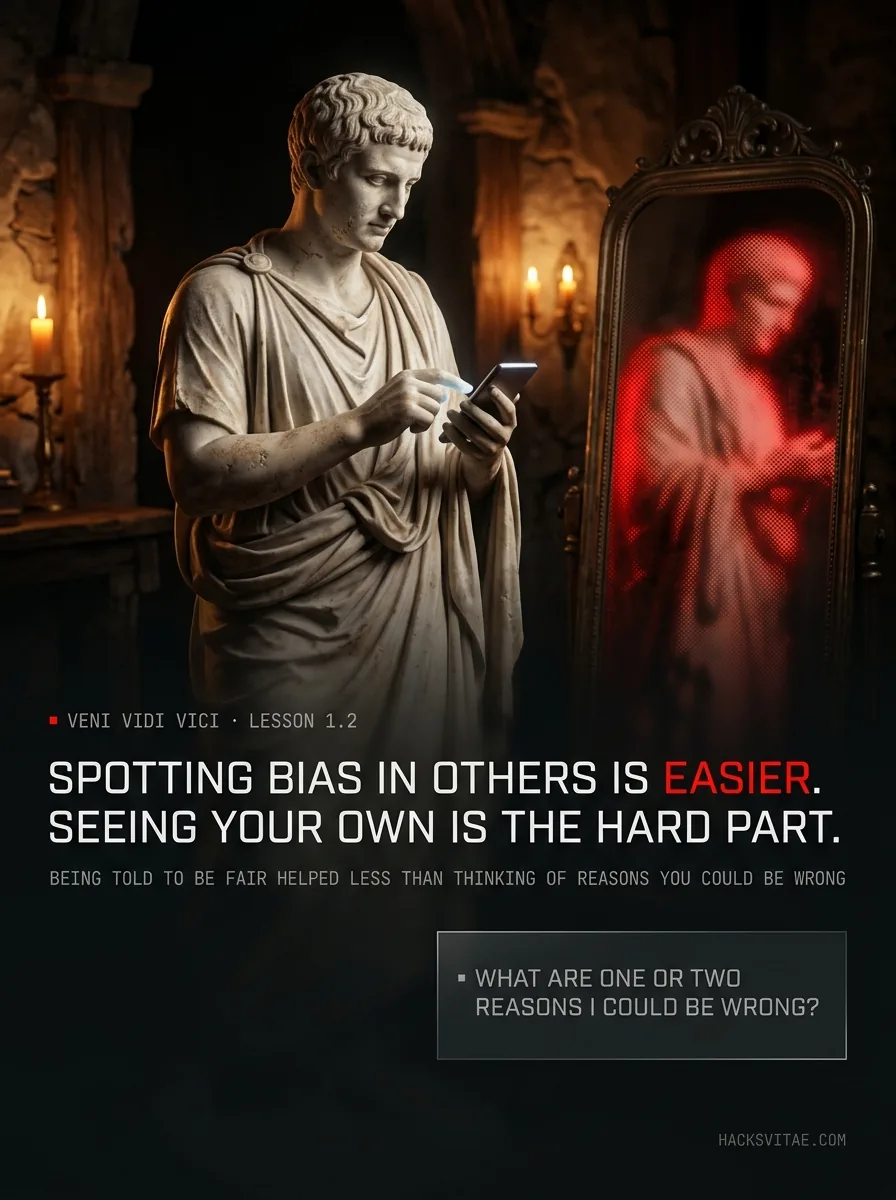
Researchers have tested many kinds of debiasing. In the studies behind this lesson, knowing about a cognitive bias did little on its own. In one set of studies, people still leaned on the first number they saw, even after a warning. Asking people to think of reasons they might be wrong corrected their judgments more. Telling them to be "as fair and unbiased as possible" corrected them less.
Even a good step can be overdone. Hindsight bias is feeling, afterwards, that an outcome could have been foreseen. In two studies, people who listed two other ways things could have gone showed no reliable sign of hindsight bias. People who listed ten showed more of it. So in those studies, a short list helped and a long one backfired.
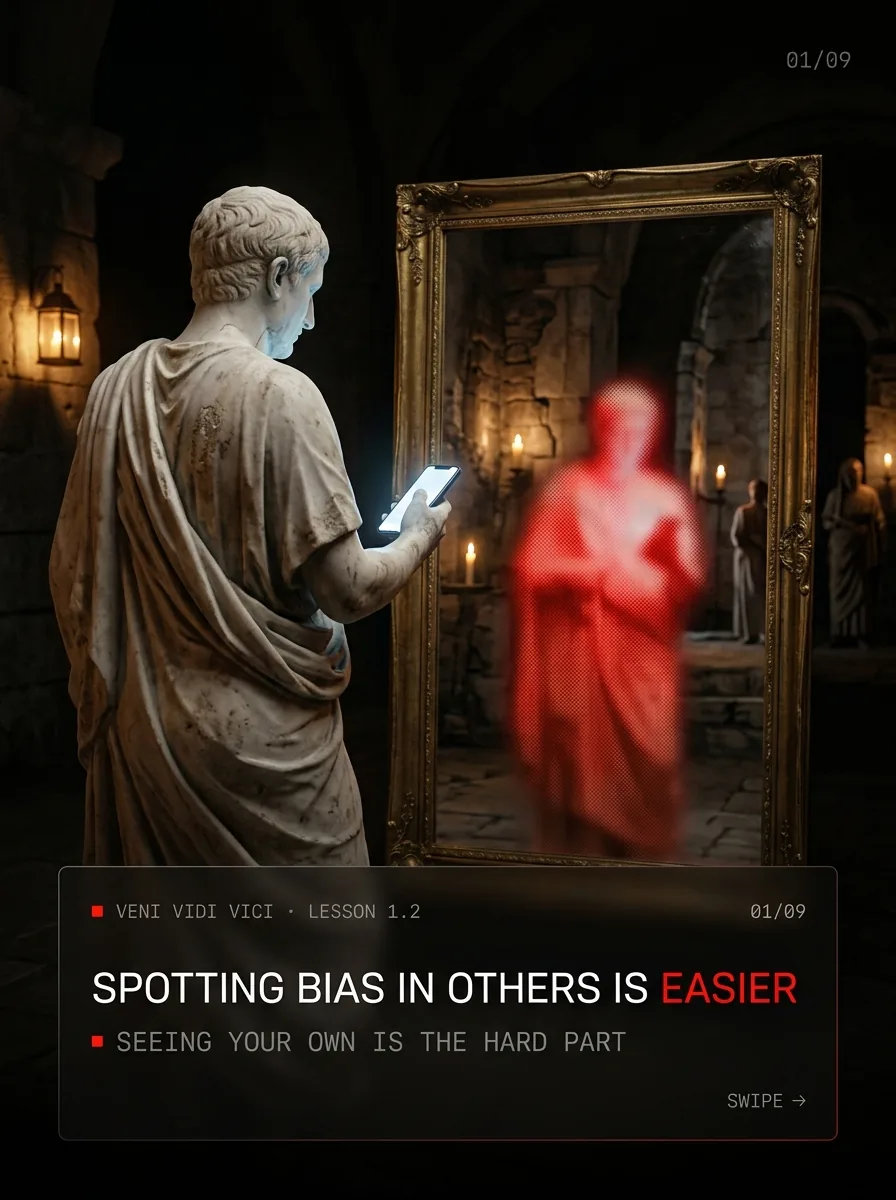
Training has reduced some biases on the same kind of task, and in some studies the effect lasted for weeks. Whether it carries over to real-life decisions is still argued. People also see bias in others more readily than in themselves, which is called the bias blind spot. This held up when tested again in later experiments. People who scored higher on tests of thinking ability did not have a smaller blind spot. The evidence that training can shrink it is thinner.
Knowing and doing are different things.
In other words
Knowing about a bias is like knowing you often forget your keys. Knowing it doesn't put them in your pocket. A hook by the door does, because it works even on the days you forget.
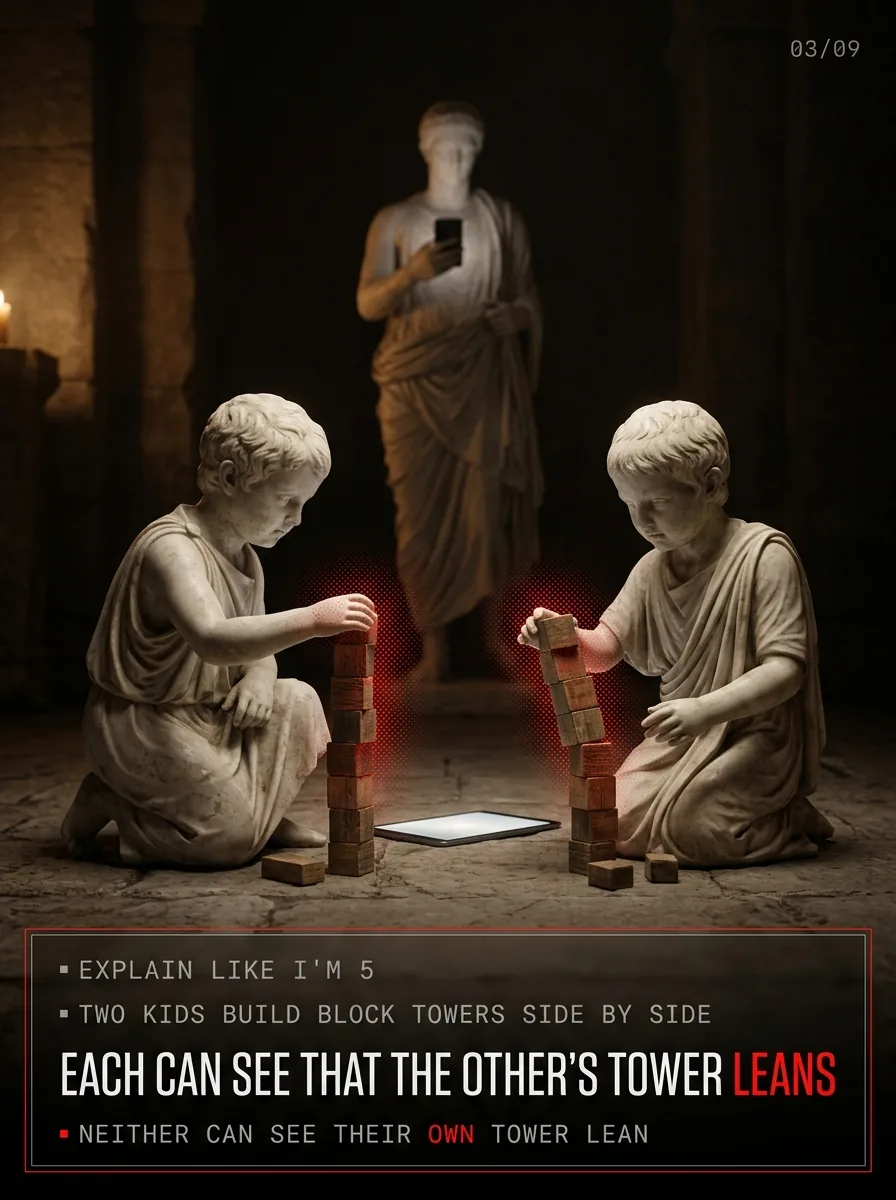
Explain like I’m 5
Two kids build block towers side by side. Each can see that the other's tower leans. Neither can see their own tower lean, because they are too close to it. A grown-up standing back sees both. Adults call this the bias blind spot.
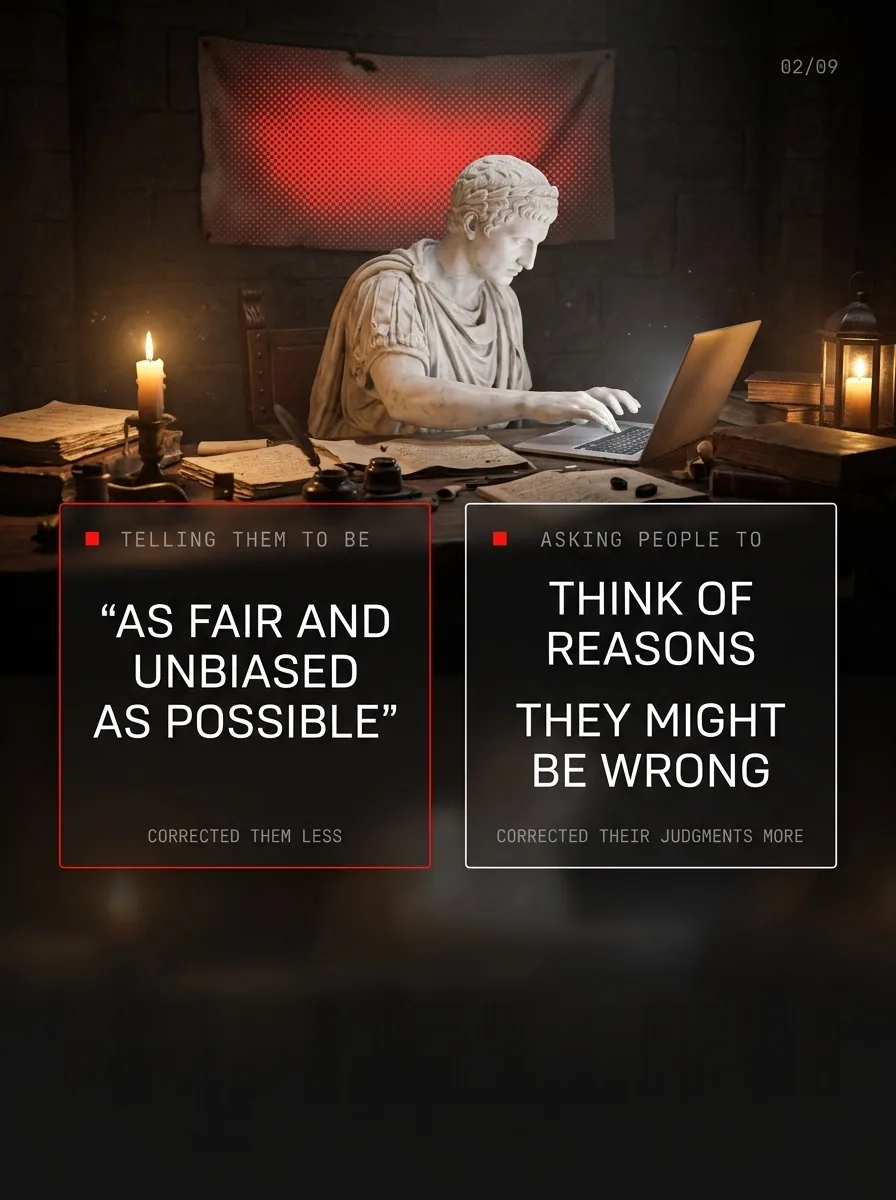
How it applies
Taken together, the studies lean towards checks that are part of how you decide, instead of willpower. That is our reading. A step built into the routine happens whether or not anyone recalls the lesson. The drawing shows three such checks. The outside view looks at how similar past cases went; the inside view looks only at your own plan. And a second pair of eyes may see what looking inward misses.
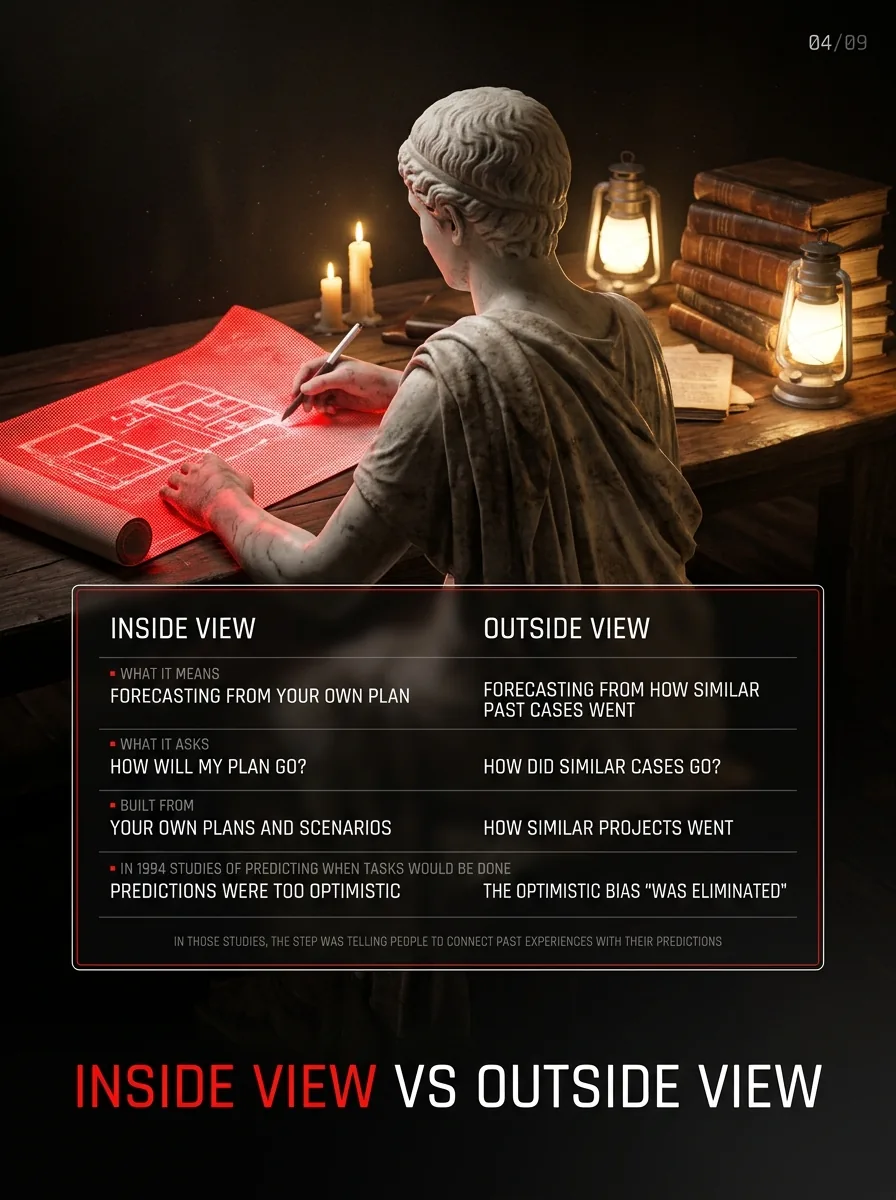
Inside view vs outside view
| Compared | Inside view | Outside view |
|---|---|---|
| What it means | Forecasting from your own plan | Forecasting from how similar past cases went |
| What it asks | How will my plan go? | How did similar cases go? |
| Built from | Your own plans and scenarios | How similar projects went |
| In 1994 studies of predicting when tasks would be done | Predictions were too optimistic | The optimistic bias "was eliminated" |
In those studies, the step was telling people to connect past experiences with their predictions.
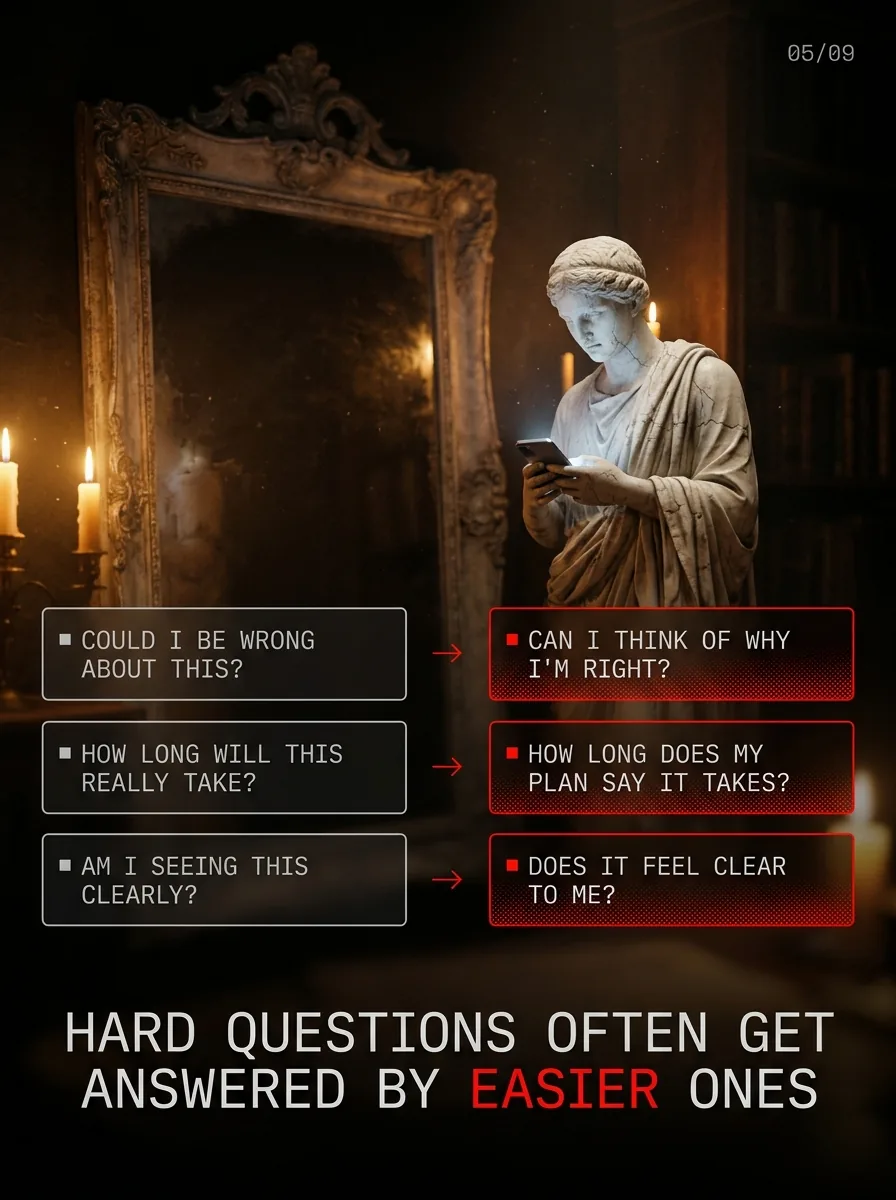
If… then…
Examples (ours)
When a question is hard, the mind quite often answers an easier one instead, usually without noticing.
- If the hard question is 'Could I be wrong about this?', the easier one is often 'Can I think of why I'm right?'
- If the hard question is 'How long will this really take?', the easier one is often 'How long does my plan say it takes?'
- If the hard question is 'Am I seeing this clearly?', the easier one is often 'Does it feel clear to me?'
Work, shops and friends.
Where you’ll see it
Everyday examples (ours)
- At work: a plan is agreed in minutes, and nobody is asked to argue the other side.
- Shopping: the first price you saw can still shape what feels like a deal, even when you know the trick.
- With friends: you can see when a friend is too hopeful about a plan, and miss it in your own.
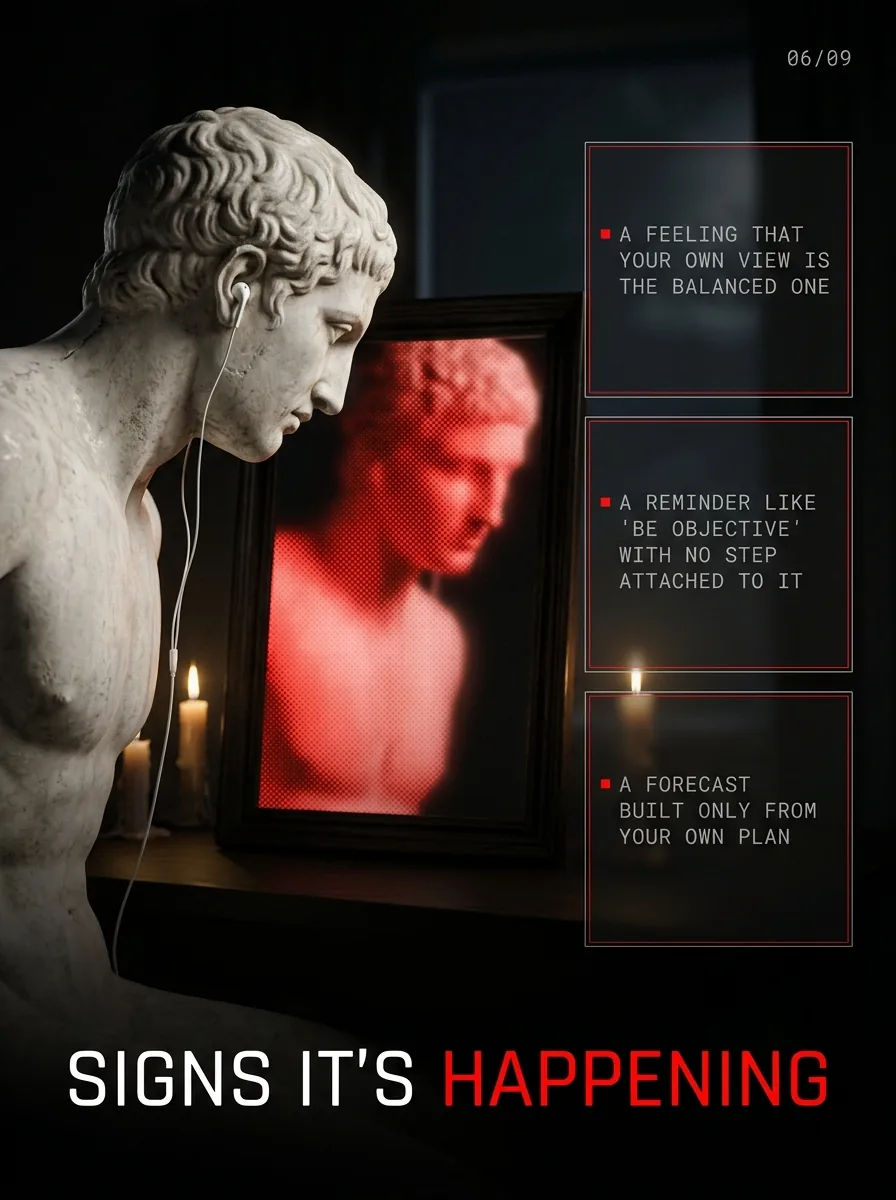
Signs it’s happening
- A feeling that your own view is the balanced one, while other people's views look slanted.
- A reminder like 'be objective' with no step attached to it.
- A forecast built only from your own plan, with no look at how past cases went.
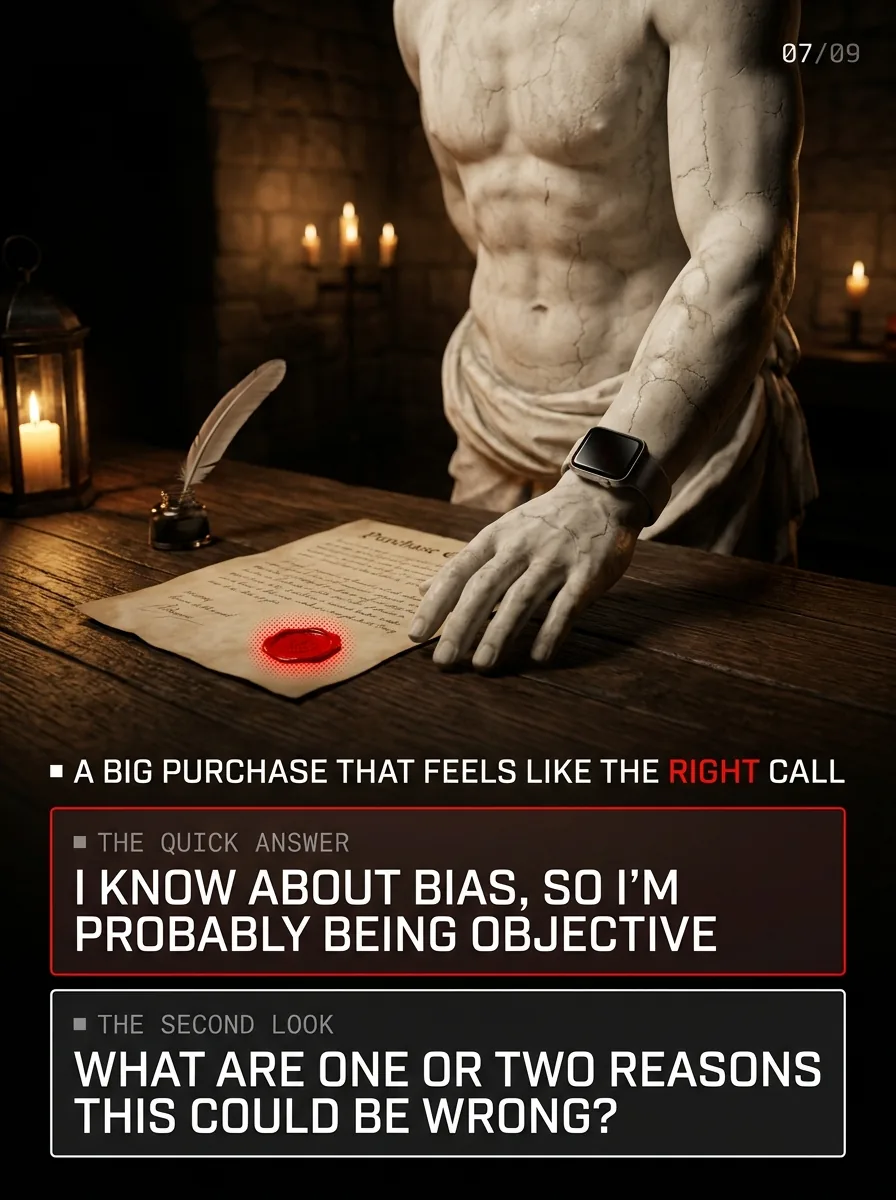
Before and after
A big purchase that feels like the right call.
"I know about bias, so I'm probably being objective," and the purchase goes ahead.
"What are one or two reasons this could be wrong?" A short list, and a reason to wait may turn up.
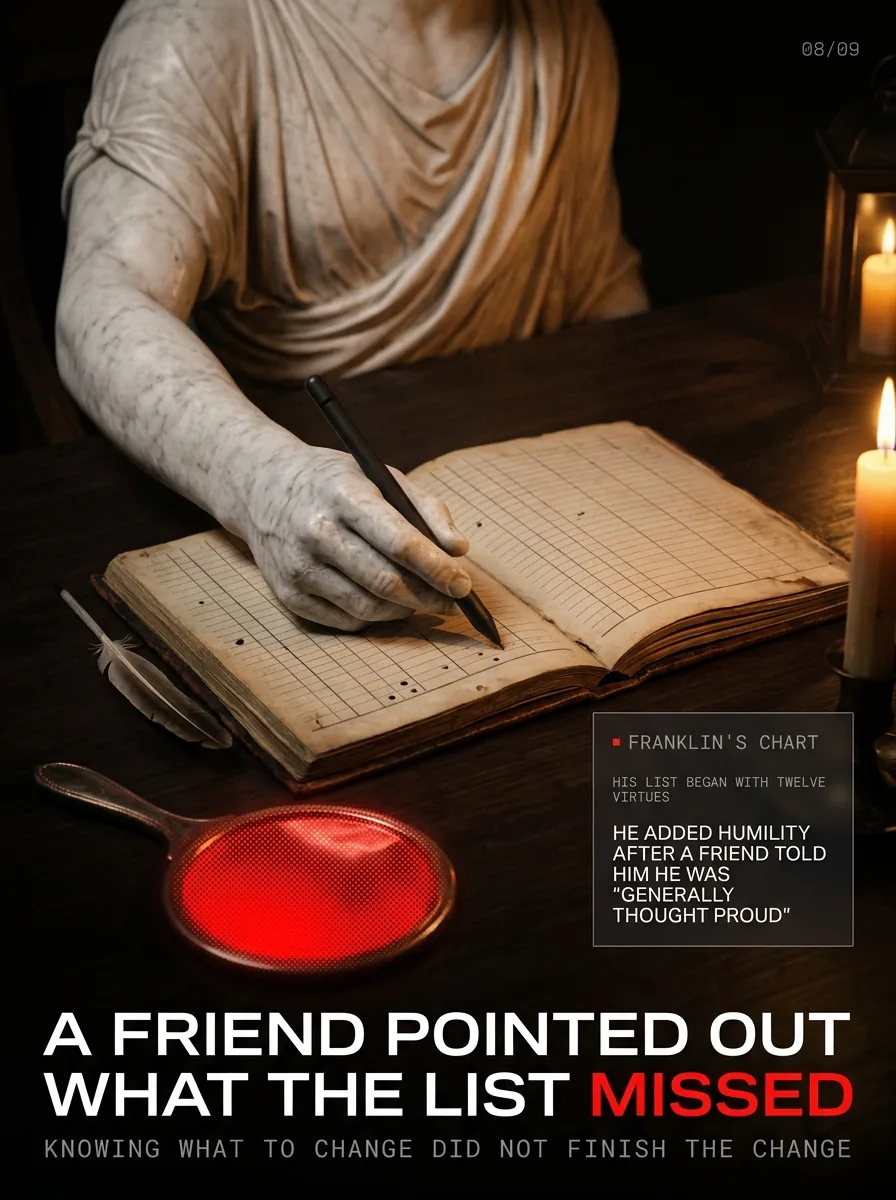
Example from history: Franklin's chart
- In his memoir, the Autobiography, the American printer Benjamin Franklin describes 13 virtues he set out to build.
- He kept a chart and marked "by a little black spot, every fault".
- His list began with twelve virtues. He added Humility after a friend told him he was "generally thought proud".
- Of Humility, he wrote that he had little success with "the reality of this virtue, but I had a good deal with regard to the appearance of it."
Franklin's story is about a virtue, not a thinking bias. Still, a friend pointed out what his list had left out. And knowing what to change did not finish the change.
Three words worth knowing.
Key terms
- cognitive bias
- A systematic, common tendency that skews judgement or decision-making in the same direction, in ways that can make the outcome inaccurate or less than ideal. Glossary →
- debiasing
- Efforts to reduce or remove the effect of a thinking bias on judgements and decisions. Glossary →
- bias blind spot
- The tendency to see yourself as less influenced by biases than other people are. Glossary →
Quick check3 questions · nothing is saved
1. In the studies, what corrected people's judgments more than being told to be fair?
2. In the two hindsight studies, what did listing ten other ways things could have gone do?
3. What is the bias blind spot?
For more: the research behind it
Optional. Everything above stands on its own; these are the full articles, with every source.
- Can You Train Away Bias? What the Studies Tried and What They FoundMindset · 15 min
- Thinking, Fast and Slow Summary: The Key Ideas, What Holds Up, and How to Use ThemMindset · 9 min
- The Autobiography of Benjamin Franklin Summary: The Key Ideas, What Holds Up, and How to Use ThemSelf-Improvement · 6 min
- 7 Thinking Skills: What the Research Shows, and How to Practise Each OneMindset · 15 min
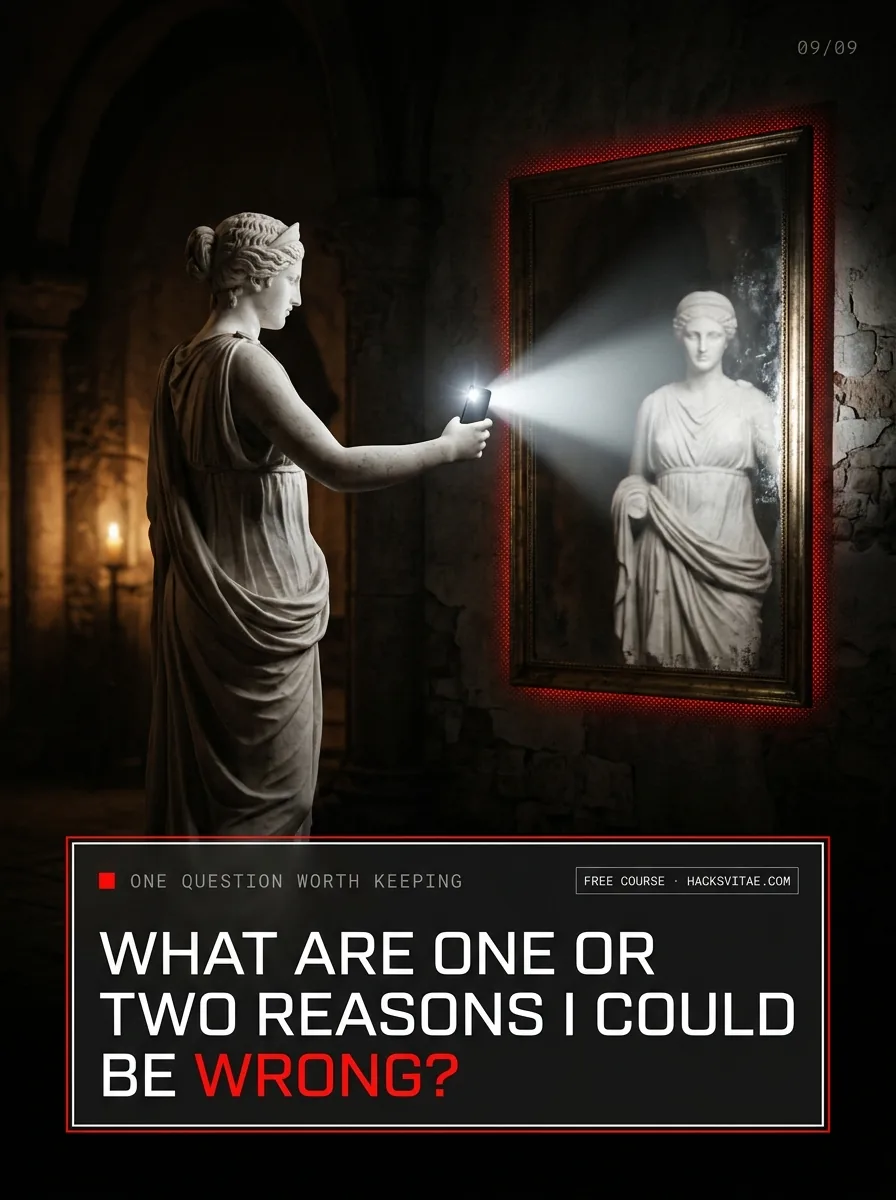
One question worth keeping.
In one line
Knowing a bias names the problem; one or two reasons you could be wrong give you a way through.
Whose blind spot have you been sure you could see, and what might they see in yours?
All slides
This lesson as images, to save or share. Tap one to download it.