The idea
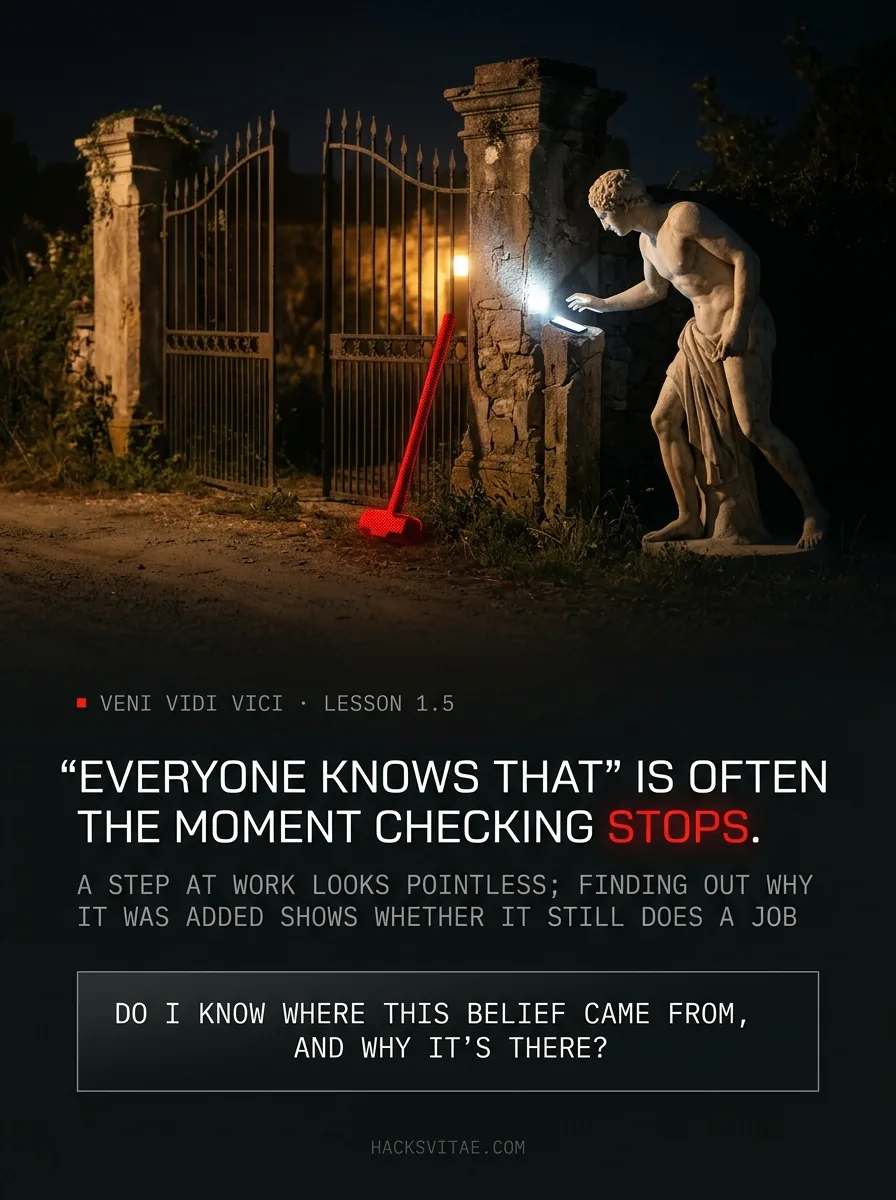
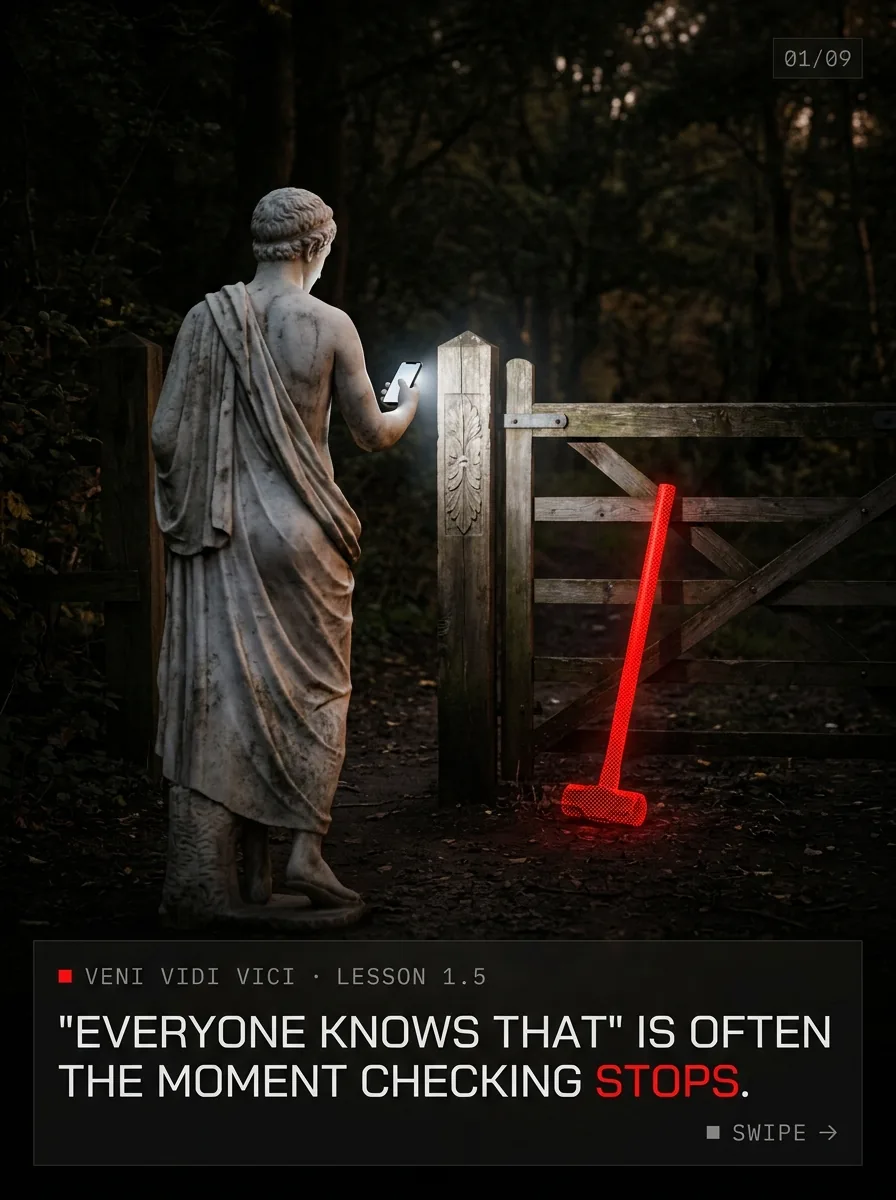
The writer G. K. Chesterton, in his book The Thing (1929), pictured a fence or gate across a road. A reformer says he cannot see its use and wants it cleared away. Chesterton's reply: go away and think, and come back when you can say what it is for. Then it may come down; it may have been put up for a bad reason, turned harmful since, or do a job nobody needs now. This idea is known as Chesterton's fence.
A second check is how common something is to begin with, called its base rate. The psychologists Amos Tversky and Daniel Kahneman set a puzzle about a cab in a night-time hit-and-run. The city has two cab companies: 85% of cabs are Green's and 15% are Blue's. A witness says Blue and, in tests, names colours correctly 80% of the time. The typical answer was about 80% that it was Blue; worked out, it is about 41%. Green cabs are so common that, for every 12 right 'Blue' calls, there are about 17 wrong ones.
How often people overlook base rates is argued over. In another study, people were told someone was picked from a group of 30 engineers and 70 lawyers. With no other information, they used those odds correctly. Given a short description of the person, they guessed much the same whatever the split. Tversky and Kahneman read this as base rates 'effectively ignored'. A 1996 review by Jonathan Koehler found base rates 'are almost always used', more so when given as counts.
Solomon Asch ran studies at Swarthmore College in the US in the 1950s. In a task of judging lines, actors around each real participant all chose the wrong line on most trials. On those trials, group pressure swayed just over a third of the answers; most answers stayed correct. Going along with others like this is called conformity.
Two easy choices, and one that tells you something.
In other words
Think of an old house with a door nobody uses. Keeping it shut because it has always been shut tells you nothing. Bricking it up because it looks pointless tells you nothing either. Finding out where it leads tells you whether it matters.
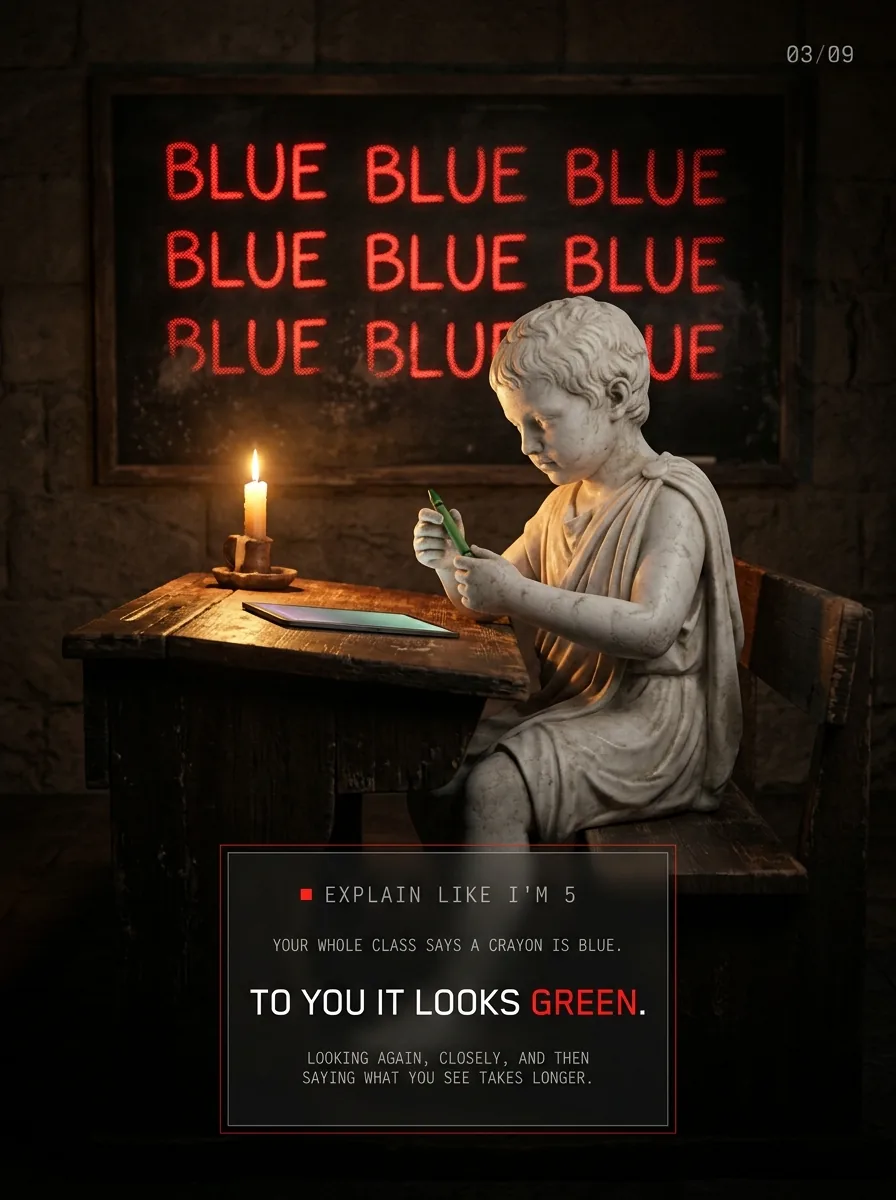
Everyone says blue. It looks green to you.
Explain like I’m 5
Your whole class says a crayon is blue. To you it looks green. Saying 'blue' to fit in, or 'green' to stand out, is easy. Looking again, closely, and then saying what you see takes longer.
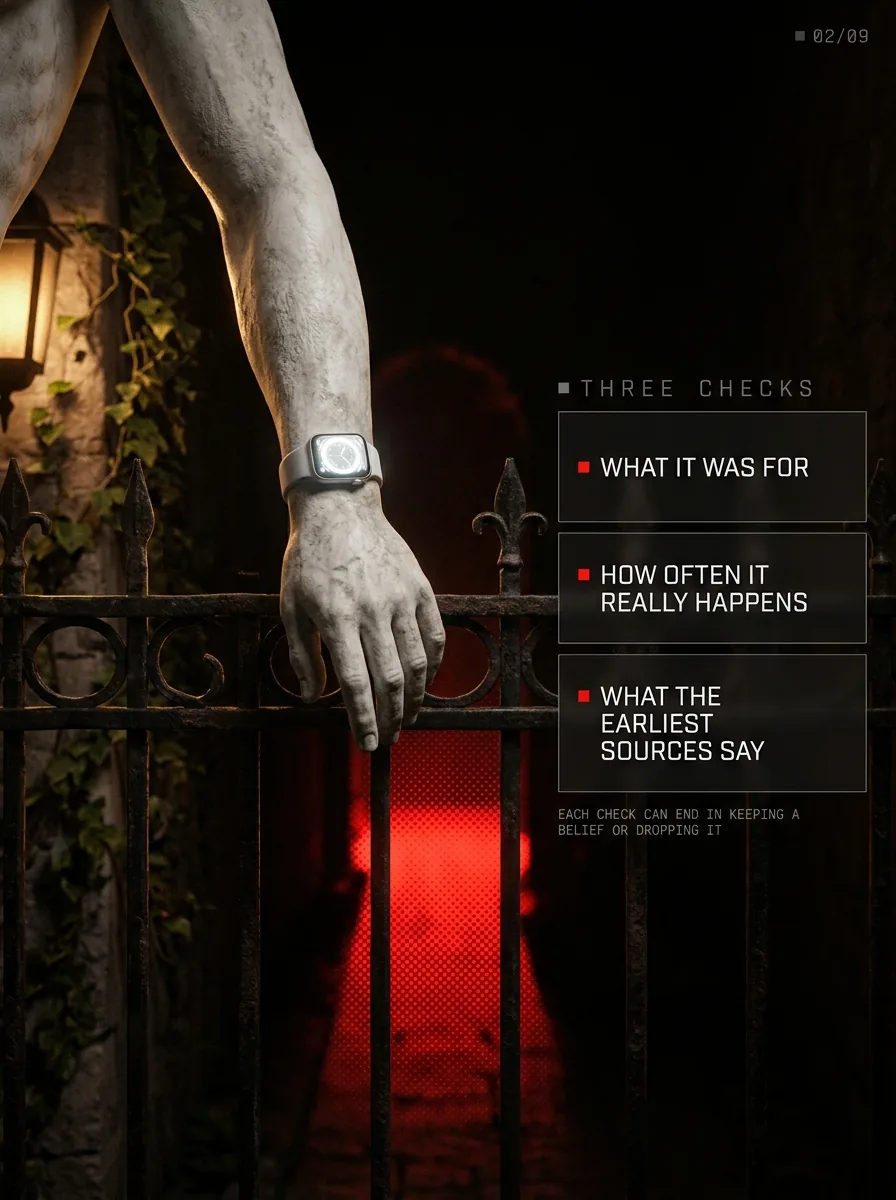
Each check can go either way.
How it applies
The three checks work on any belief, old or new, popular or not. Each check can end in keeping a belief or dropping it.
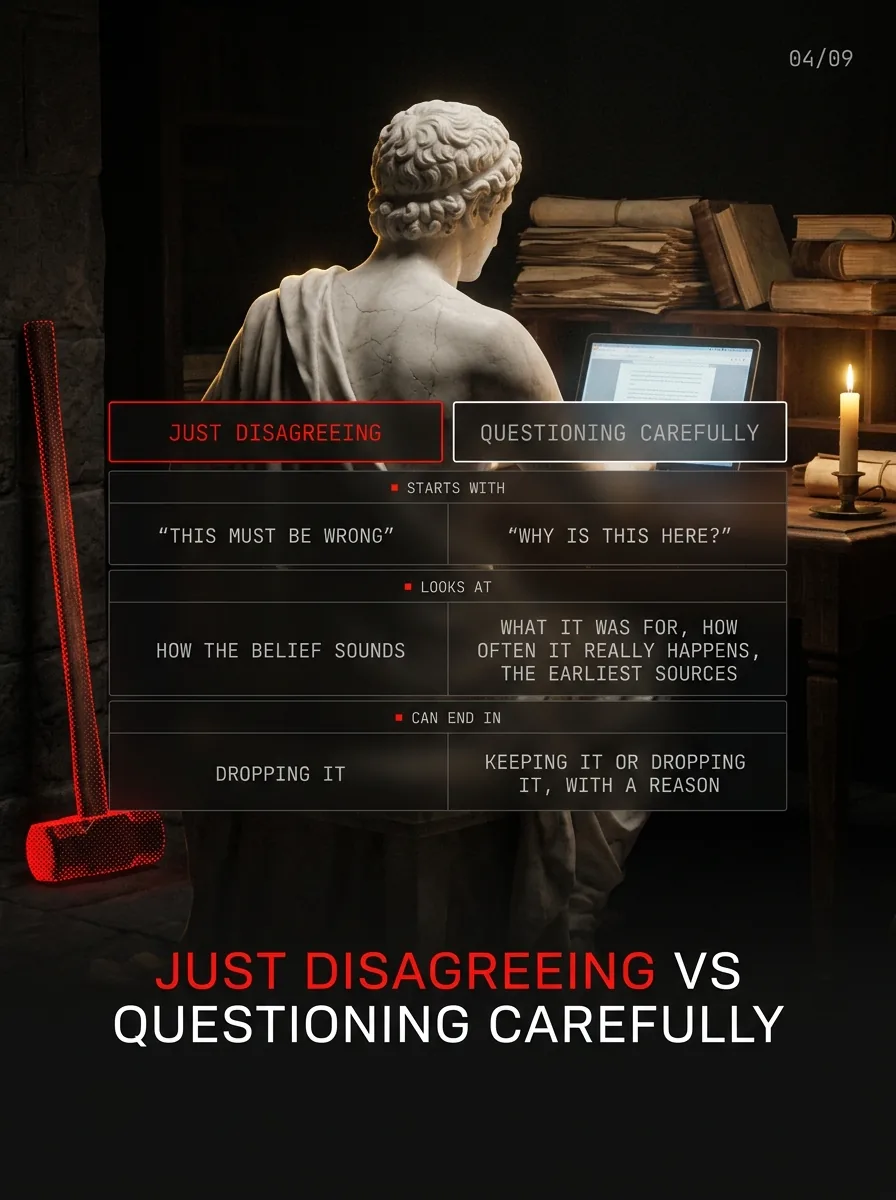
Just disagreeing vs questioning carefully
| Compared | Just disagreeing | Questioning carefully |
|---|---|---|
| Starts with | "This must be wrong" | "Why is this here?" |
| Looks at | How the belief sounds | What it was for, how often it really happens, the earliest sources |
| Can end in | Dropping it | Keeping it or dropping it, with a reason |
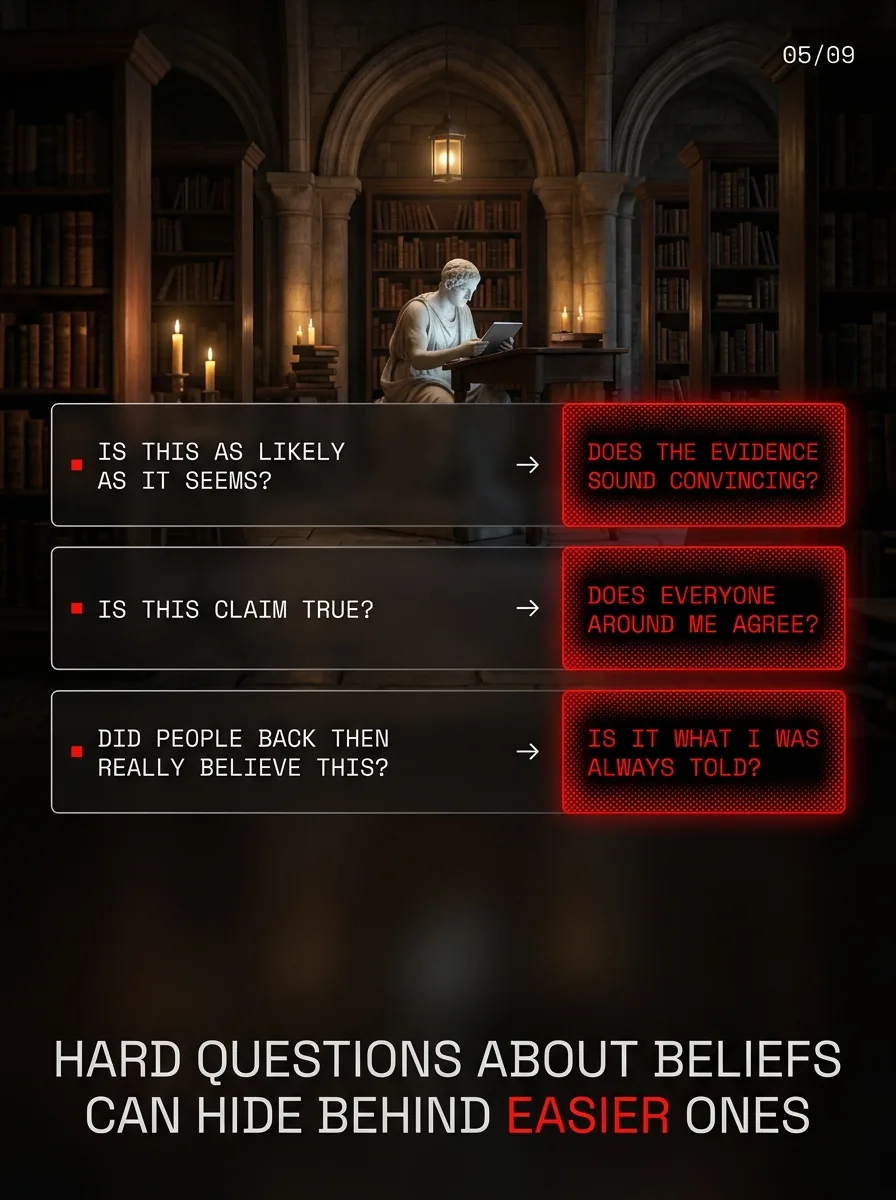
If… then…
Examples (ours)
When a question is hard, the mind often answers an easier one without noticing. Some pairs to watch for.
- If the hard question is 'Is this as likely as it seems?', the easier one can be 'Does the evidence sound convincing?'
- If the hard question is 'Is this claim true?', the easier one can be 'Does everyone around me agree?'
- If the hard question is 'Did people back then really believe this?', the easier one can be 'Is it what I was always told?'
A meeting room and the news.
Where you’ll see it
Everyday examples (ours)
- In a meeting: everyone backs a plan, and one person sees a problem.
- In the news: a rare danger suddenly seems to be everywhere.
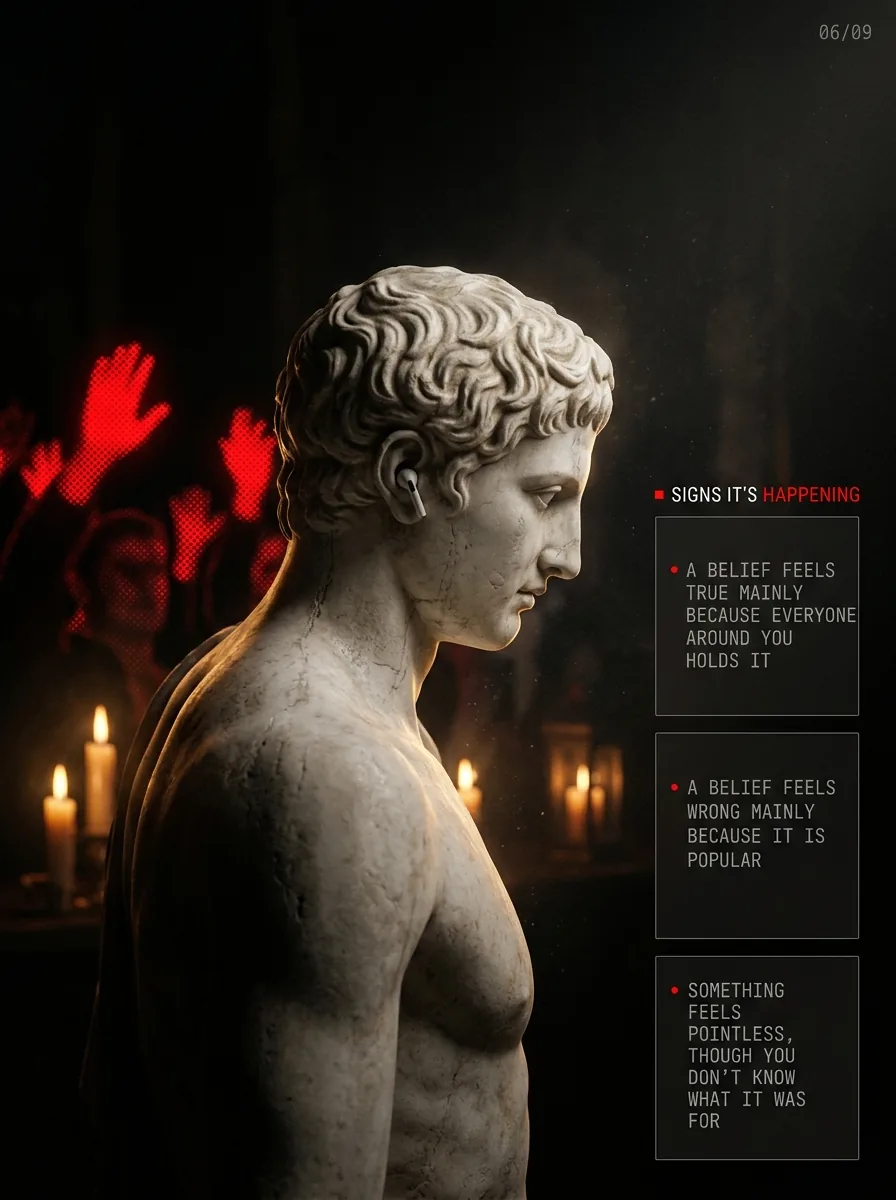
Skipping the check can feel like thinking for yourself.
Signs it’s happening
- A belief feels true mainly because everyone around you holds it.
- A belief feels wrong mainly because it is popular.
- Something feels pointless, though you don't know what it was for.
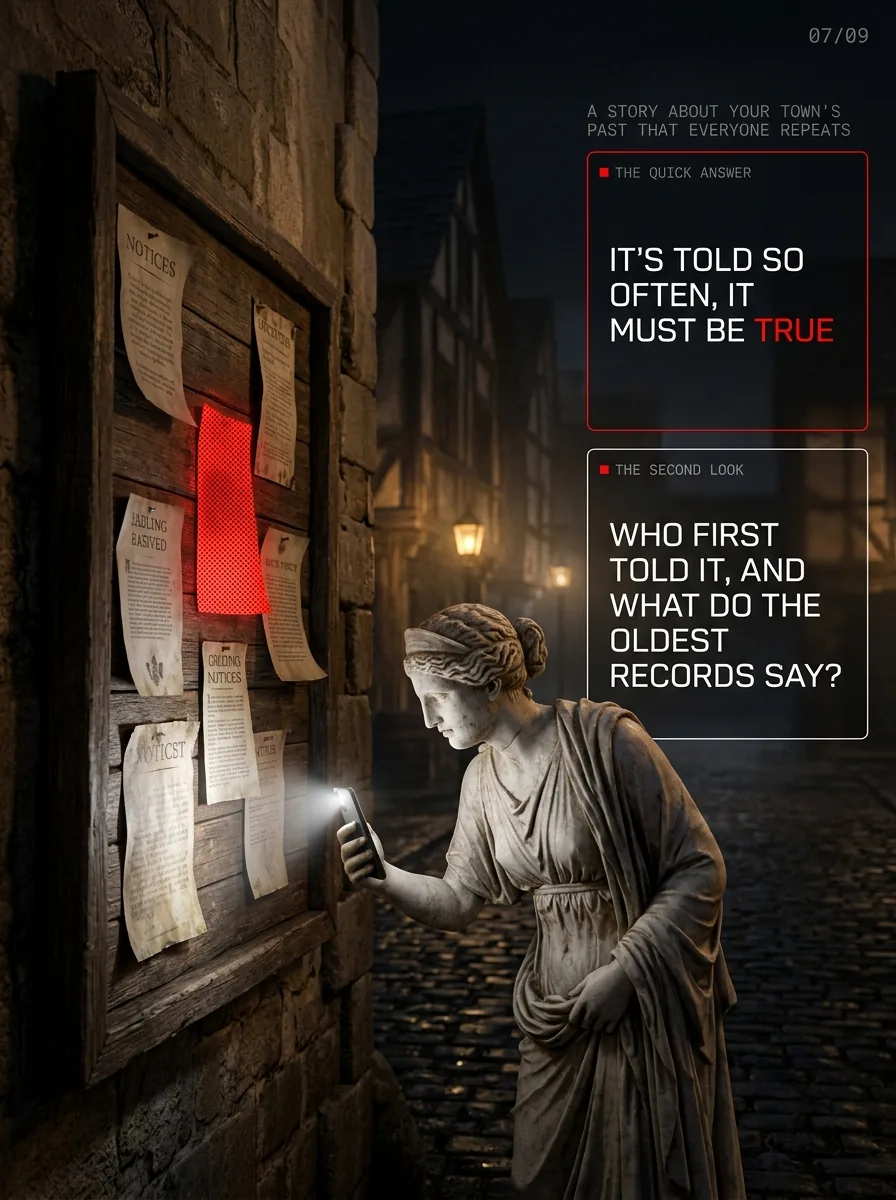
Before and after
A story about your town's past that everyone repeats.
"It's told so often, it must be true."
"Who first told it, and what do the oldest records say?" may confirm the story or change it.
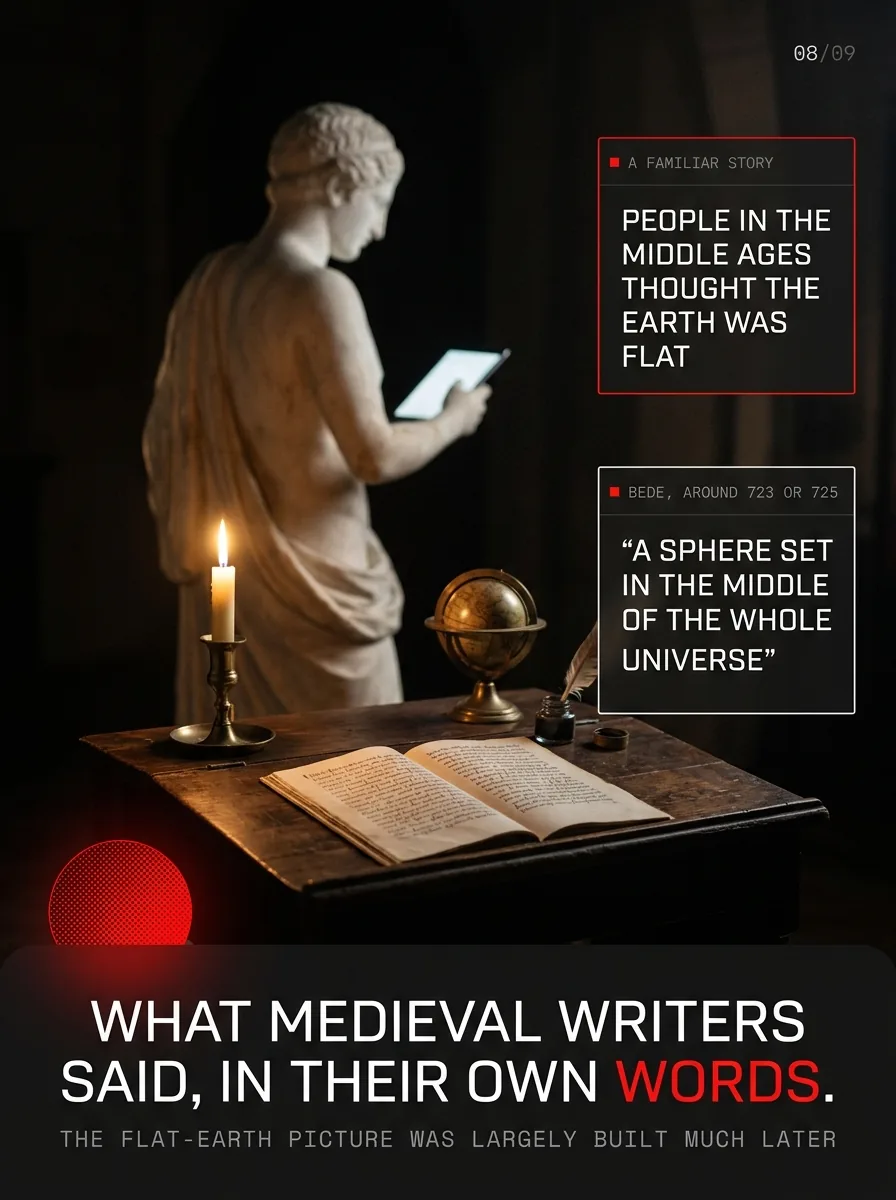
Example from history: Did medieval people think the Earth was flat?
- A familiar story says people in the Middle Ages thought the Earth was flat.
- Medieval scholars' own writings say otherwise. Around 723 or 725, the monk Bede wrote that the Earth is 'a sphere set in the middle of the whole universe'.
- A 13th-century astronomy book by the medieval scholar Sacrobosco, De sphaera, says the Earth only looks flat to us 'because it is so extensive'.
- A few early Christian writers did reject a round Earth. The historian Jeffrey Burton Russell counts at least two and at most five.
- The flat-Earth picture was largely built much later. In 1828, the writer Washington Irving's life of Columbus told of a hearing at Salamanca. In his telling, some answered Columbus with Bible texts against a round Earth.
What helped was reading Bede and Sacrobosco in their own words: primary sources, written at the time. The other step was finding when the story first appeared.
Two words worth knowing.
Key terms
- conformity
- Changing your opinions, judgements or actions to match those of other people or the standards of a group. Glossary →
- primary source
- An original document made at the time being studied, such as a letter or a speech, or a person who saw the events. Glossary →
Quick check3 questions · nothing is saved
1. In Chesterton's picture, when may the reformer take the fence down?
2. In Asch's studies, what happened to most answers when the actors all chose the wrong line?
3. In the cab puzzle, why is the witness's 'Blue' weaker evidence than it sounds?
For more: the research behind it
Optional. Everything above stands on its own; these are the full articles, with every source.
- Mental Models, Checked: 15 Thinking Tools and Where They Really Come FromMindset · 10 min
- Numbers That Mislead: 10 Statistical Traps and How to Spot ThemMindset · 8 min
- Famous Psychology Experiments, Checked: What Really Happened in 8 Studies Everyone QuotesMindset · 16 min
- Medieval People Did Not Think the Earth Was Flat: Where the Myth Really Came FromHistory · 6 min
- Thinking, Fast and Slow Summary: The Key Ideas, What Holds Up, and How to Use ThemMindset · 9 min
What knowing the source gives you.
In one line
Knowing where a belief came from, and why, is what lets you keep it or drop it with a reason.
What do you believe mainly because everyone around you does, and do you know where it first came from?
All slides
This lesson as images, to save or share. Tap one to download it.