

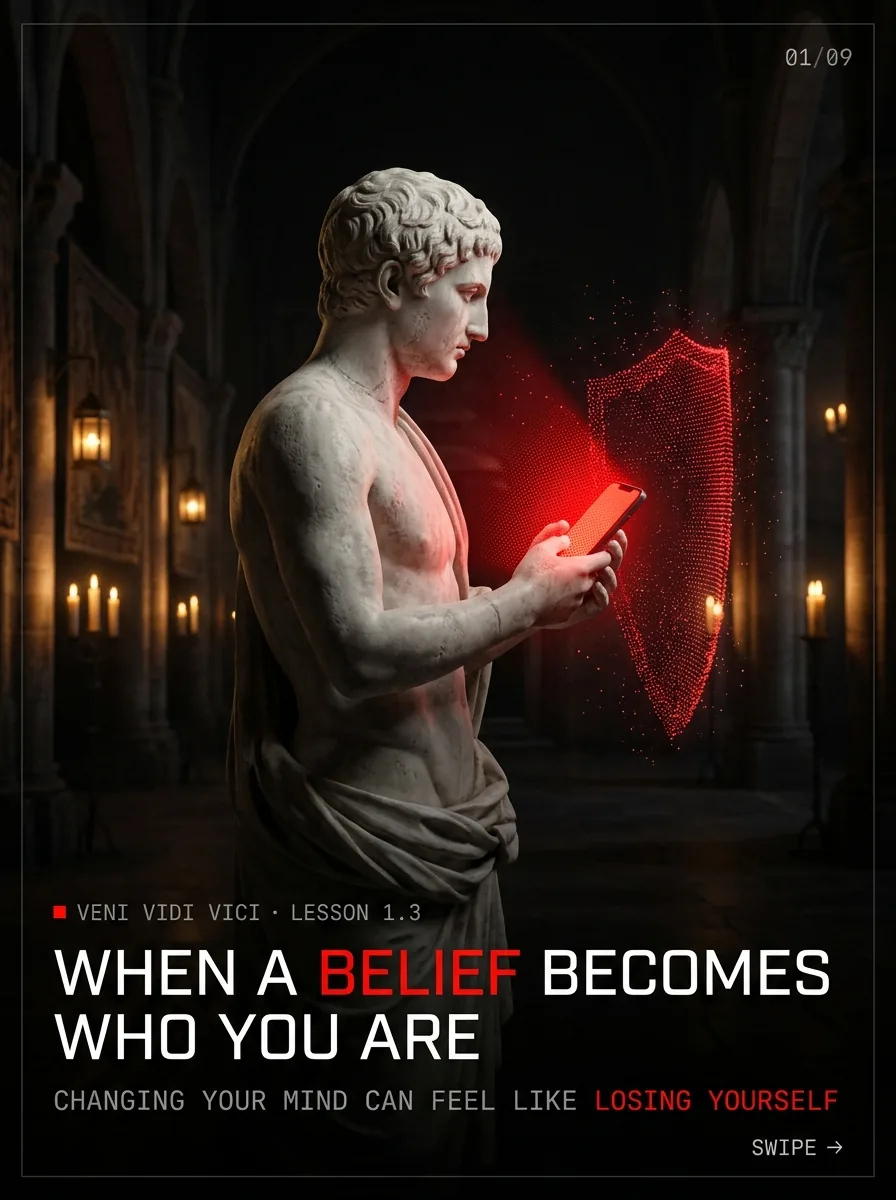
The idea
The organisational psychologist Adam Grant wrote Think Again, a book about changing your mind. He argues that the ability to rethink may matter more than raw intelligence. He describes three habits from a 2002 paper by the psychologist Philip Tetlock. A preacher defends beliefs held sacred; a prosecutor tries to prove the other side wrong; a politician campaigns for approval. Grant suggests a fourth: the scientist, who treats an opinion as a hypothesis, a guess you test.
The book's publisher sums up one idea: being good at thinking can make us worse at rethinking. In a 2017 study, people best with numbers read data about a skin-rash treatment more accurately. Then the same data were about a gun-control ban, a topic that divides people politically. Among people best with numbers, the split between political sides did not shrink; instead, it grew. Yet two large attempts to repeat it did not find good evidence that skill with numbers makes people more one-sided.
A challenge can also feel personal. In a 2014 review, Geoffrey Cohen and David Sherman write about our sense of being an adequate person. Threats to it, they write, stir up stress and self-protective defences. In a large 1996 review of feedback studies, the authors found feedback threatening self-esteem did less to help performance.
Self-affirmation theory says we want to see ourselves as moral, competent and in control. Its exercises typically have people write about core personal values. Across 144 tests with health warnings, these had small but reliable effects on accepting the message. But a large 2017 attempt to repeat an earlier school study found no evidence of an effect on school results.
Something you wear, or something you are?
In other words
Think of a view as a coat you wear, not your own skin. A coat comes off easily when the weather changes. But a coat you never take off starts to feel like skin; then any tug on it hurts, and you pull away.
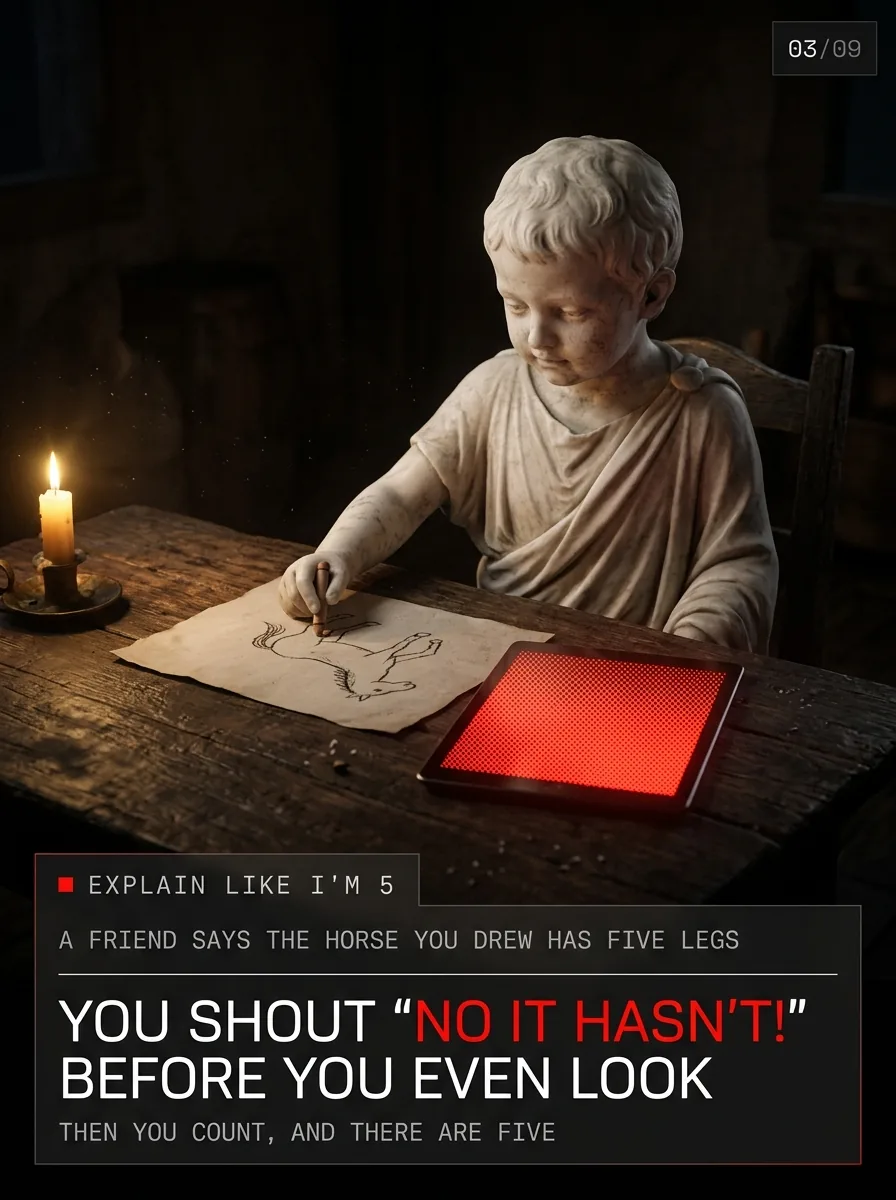
Ever defended a drawing before looking at it?
Explain like I’m 5
A friend says the horse you drew has five legs. You shout 'No it hasn't!' before you even look. Then you count, and there are five.
Three moves, from defending to testing.
How it applies
Applying it comes down to three moves. The first is noticing the urge to defend. Next is naming the habit that kicked in, whether preacher, prosecutor or politician. Last is holding the view as a hypothesis, and asking what would change it. The view may still turn out right; the point is that it gets tested.
Two ways to hold a view.
Defending a view vs testing it
| Compared | Defending | Testing |
|---|---|---|
| Like a | Preacher, prosecutor or politician | Scientist |
| The opinion is | Something to protect, prove or win approval for | A hypothesis: a guess you test |
| When the evidence changes | Something other than evidence decides | The view is updated |
Naming the habit as it happens is our suggestion, not a technique anyone has tested.
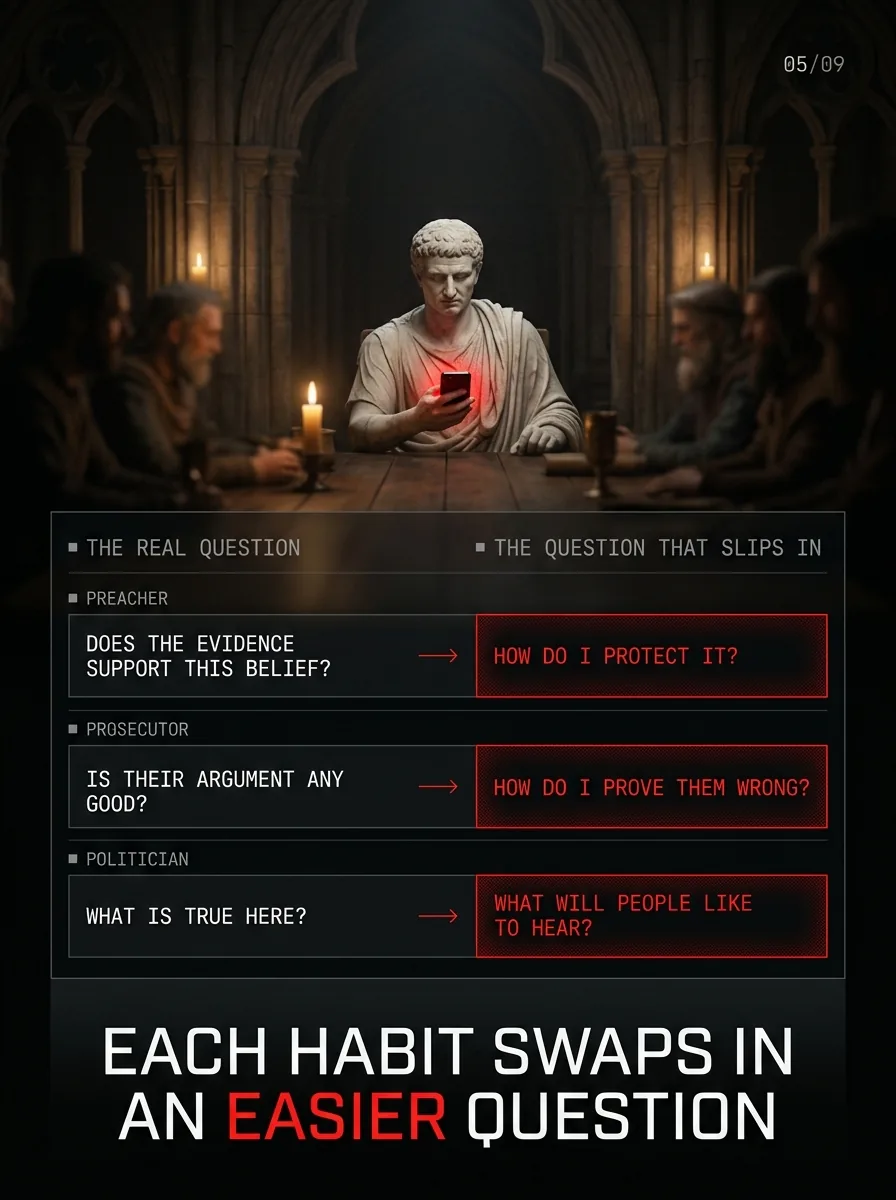
If… then…
Examples (ours)
- If the real question is 'Does the evidence support this belief?', the preacher's question that slips in is often 'How do I protect it?'
- If the real question is 'Is their argument any good?', the prosecutor's question that slips in is often 'How do I prove them wrong?'
- If the real question is 'What is true here?', the politician's question that slips in is often 'What will people like to hear?'
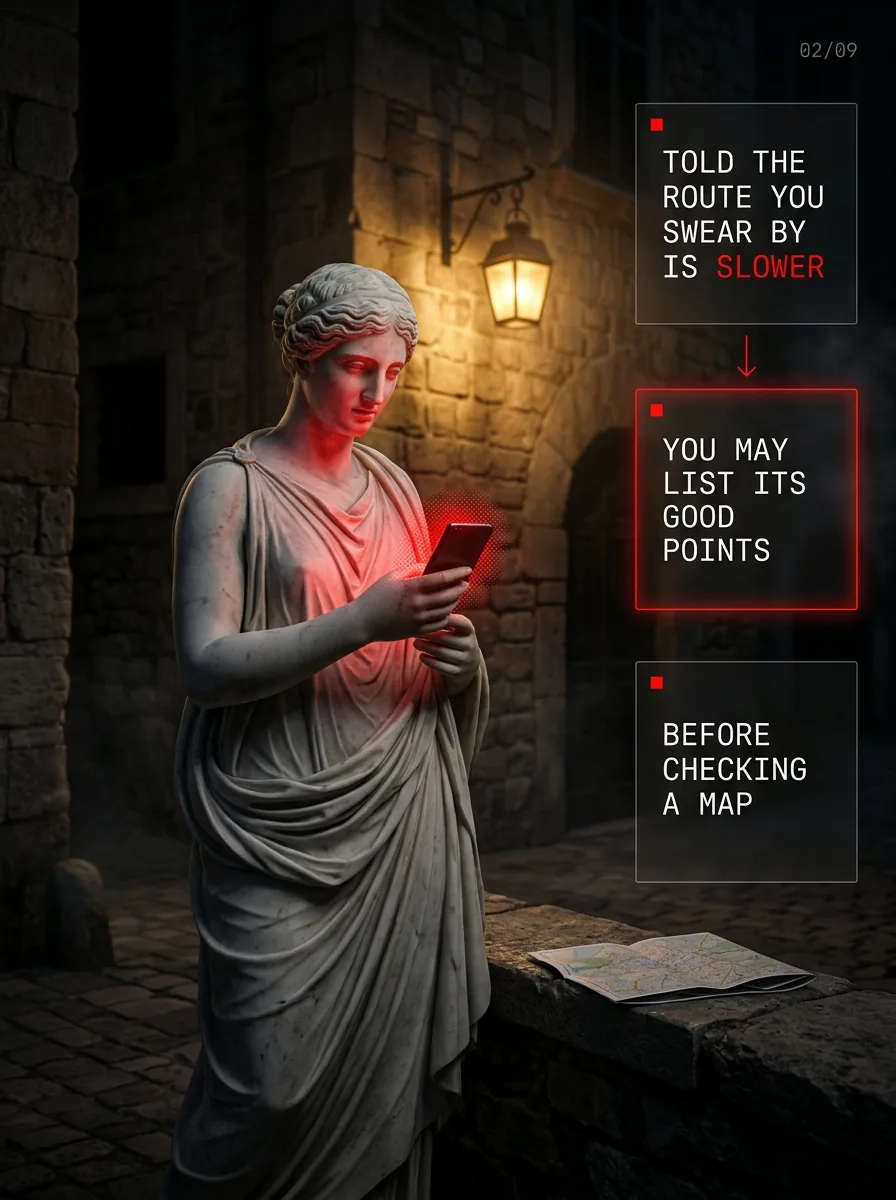
Where you’ll see it
Everyday examples (ours)
- At work: a better method suggested by a newer colleague can be easy to wave away.
- At home: "You always forget" can turn a talk about one missed bill into a talk about who you are.
- With friends: losing an argument about a film can sting more than the film deserves.
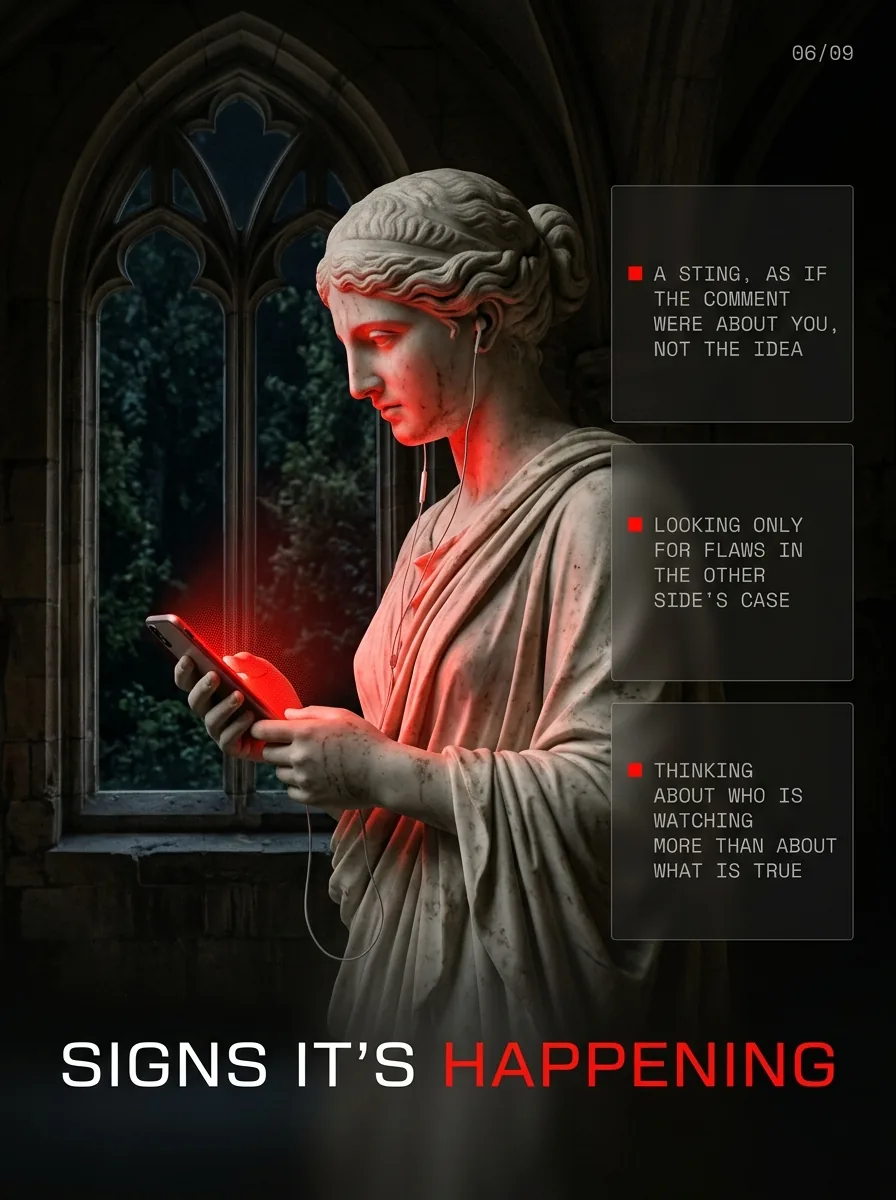
It feels like thinking. It may be guarding.
Signs it’s happening
- A sting, as if the comment were about you, not the idea.
- Looking only for flaws in the other side's case.
- Thinking about who is watching more than about what is true.

Before and after
A friend says the restaurant you picked has had bad reviews.
You list its best dishes and the night you loved it there. The reviews go unread.
You read the reviews and find the complaints are about slow service. You keep the booking anyway.
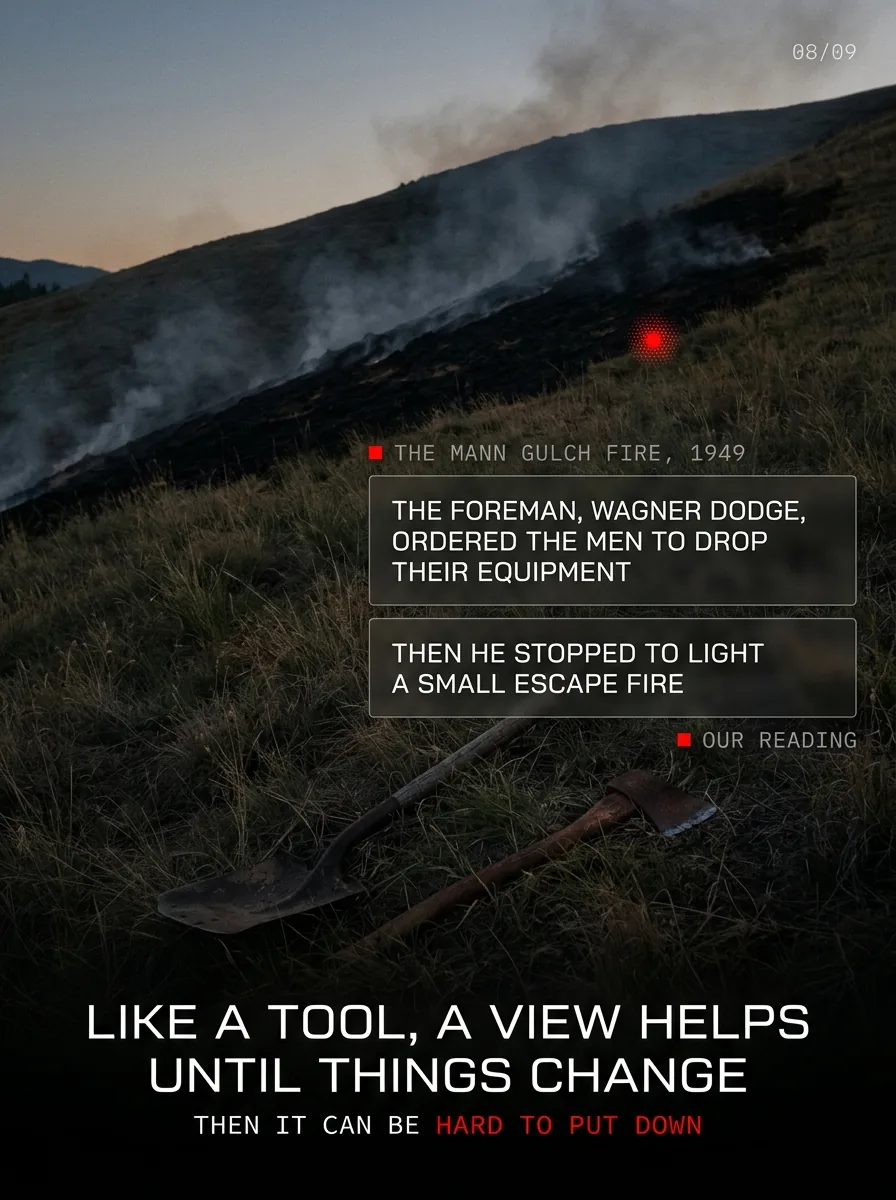
Example from history: The Mann Gulch fire, 1949
- Adam Grant opens Think Again with a true story, the Mann Gulch fire. It broke out on 5 August 1949 on the Helena National Forest in Montana, in the US.
- The fire overtook a crew of firefighters. The foreman, Wagner Dodge, ordered the men to drop their equipment.
- Then he stopped to light a small escape fire, a patch burned so the main fire would pass it by. He directed the men into it, but the rest kept running uphill.
- Of the sixteen men there, only Dodge and two others, who sheltered in a crevice, survived. The fire killed 13 firefighters.
- Grant uses the story as a picture. Firefighters carry axes and shovels; he says we all carry tools of the mind too.
This is a picture, not a verdict on the crew. Our reading: like a tool, a view helps until things change. Then it can be hard to put down.
Two words worth knowing.
Key terms
- self-affirmation theory
- The idea that people want to see themselves as moral, competent and in control, and feel uncomfortable when that self-view is challenged; affirming another part of themselves can ease it. Glossary →
- self-esteem
- How positively you see your own qualities and characteristics overall. Glossary →
Quick check3 questions · nothing is saved
1. In Adam Grant's picture, which habit treats an opinion as a hypothesis to test?
2. What did two large attempts to repeat the 2017 study find?
3. At Mann Gulch, what did the foreman, Wagner Dodge, do?
For more: the research behind it
Optional. Everything above stands on its own; these are the full articles, with every source.

The scientist's way, in one line.
In one line
Grant's scientist holds a view as a guess to test. The other three habits guard it.
Which belief of yours would you defend before testing it, and what would it take to change your mind?
All slides
This lesson as images, to save or share. Tap one to download it.