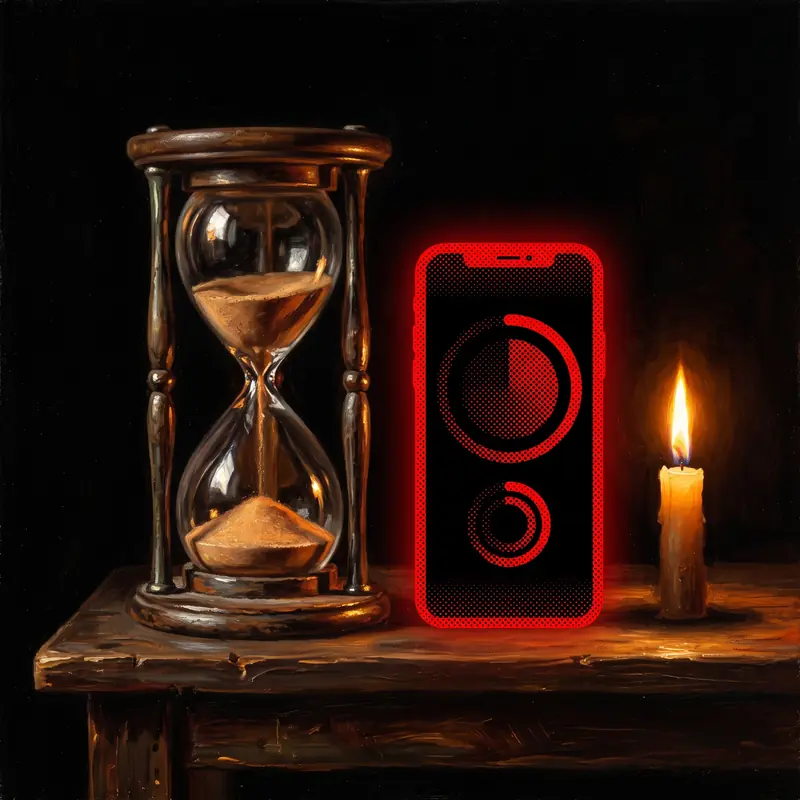
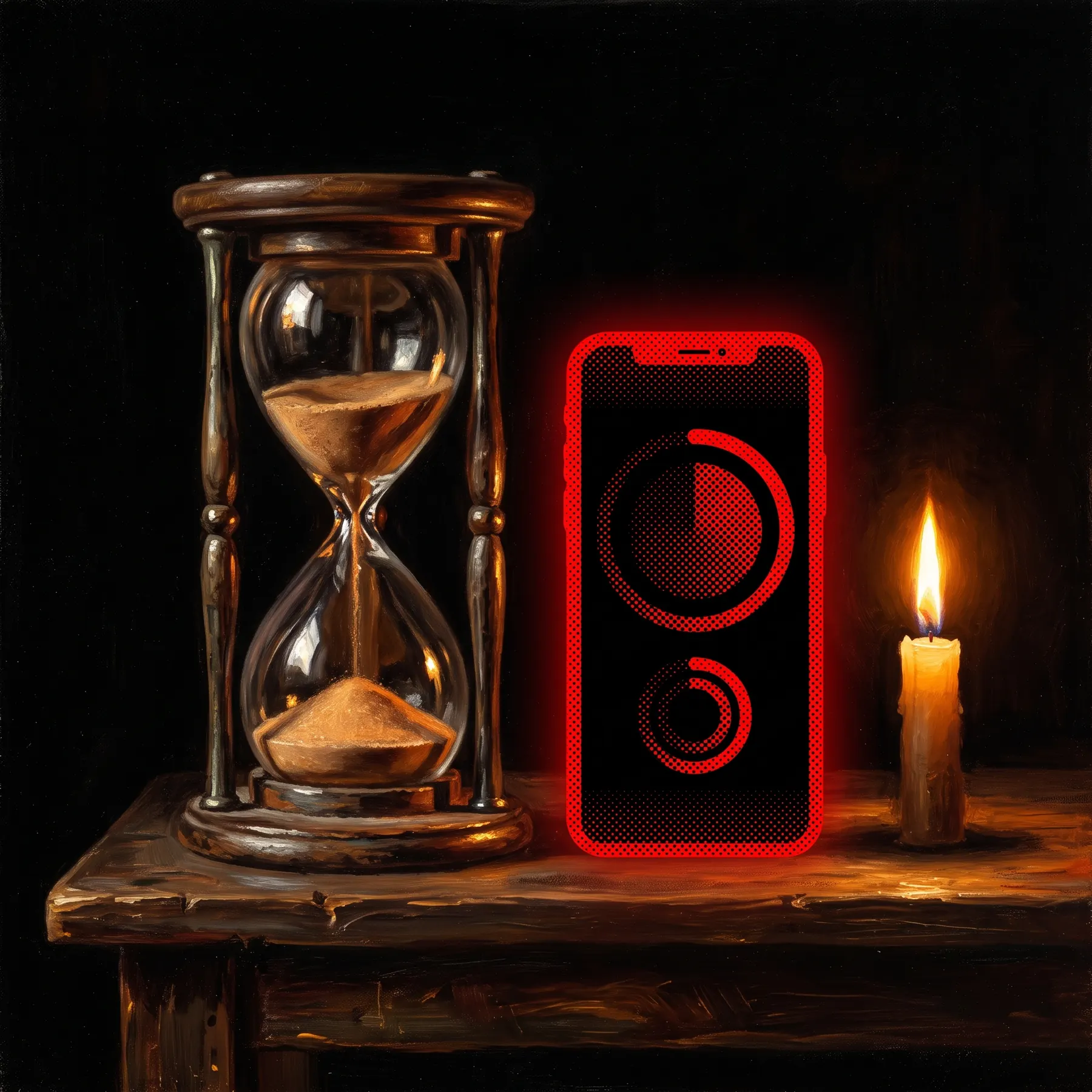
Pressure from outside, a pause, rethinking and naming.
The idea
Some feelings are put there on purpose. A fake countdown timer, for one, is made to hurry you. Tasks that only looked urgent pulled people away from tasks that paid more. When something looked scarce, people said they wanted it more. Those were lab tasks and what people said they wanted, not real shopping.
One way to notice is a short pause. It means naming the feeling, finding the claim behind it, and asking if you can check it. It also helps to ask what happens if you wait. If the answer is 'nothing much', the hurry probably comes from someone else, not from you. It's a common-sense habit, not a tested fix.
How you handle a strong feeling matters. Rethinking the situation tends to work better than trying not to feel it. A late train feels different read as 'bad luck' than as 'everything goes wrong for me'. Keeping a feeling off your face can help; trying not to feel it at all doesn't seem to.
Putting a feeling into words seems to take some of the edge off. That may not last, though: a day or two later, the feeling can be back where it started. Naming it can also make rethinking it later work less well. And when a partner names your feeling for you, it may ease the upset more than naming it yourself.
Want the research, names and dates? They are in Go deeper, at the end.
A smoke alarm worth listening to, then checking.
Picture it
A strong feeling is like a smoke alarm. It's worth listening to, because sometimes there really is a fire. But some alarms go off because someone wants you out of the building. A moment to check for smoke tells you which kind of alarm you've got. Pulling the battery out every time would be just as unwise as running every time it beeps.
For a child: You see the last cupcake in the shop, and a sign says 'Only for the next minute!' Your tummy jumps, and you want it right now. Your big sister asks, 'What are you feeling? Is the sign telling the truth?' So you wait. The minute passes, and the cupcake is still there, with the same sign. The sign was telling a fib. Your tummy wasn't wrong to jump; it just believed the sign.
Naming it, finding the claim, then deciding.
How it applies
Feelings aren't the enemy here; an honest one can be worth hearing. The aim is to notice them before they make the choice for you. The pause can be short. It starts with naming the feeling: worry, fear of missing out, guilt, or the pull of the crowd. Next comes the claim it rests on, like 'almost gone', and whether you can check it. Then comes asking what happens if you wait. If waiting changes nothing, the hurry probably isn't yours. When the feeling is your own, rethinking the situation tends to help more than trying not to feel it. Worry that's hard to control on most days is a different matter. The US National Institute of Mental Health suggests talking to a health care provider about it.
Countdown timers, sharp emails and late-night worries.
Where you’ll see it
- At home: a late-night worry turns a small decision into a big one. By morning, it may look smaller again.
- At work: a blunt email lands, and a sharp reply is half-typed before you've finished reading it.
- Online: a countdown timer and an 'almost gone' badge sit right next to the buy button, in a bright colour.
Signs it’s happening
- You feel you must decide right now, but can't say what would go wrong if you waited.
- It's a sign when the feeling is loud, but you can't name the fact it rests on. It just feels true.
- A reply is drafted before you've finished reading what you're replying to, and it's sharper than you'd say aloud.
Same blunt email, two replies.
Before and after
A colleague sends a short, blunt email about your work, late on a busy day.
"Fine, if that's how they want it." A sharp reply goes out within a minute, and the next morning is awkward. The feeling made the choice before you did.
"I'm annoyed. Is that because they're angry, or because they're rushed?" Naming the feeling leaves a gap before the reply. Waiting an hour would cost nothing much. The reply waits until morning, and it comes out calmer. If they really were angry, you'll still find out, and you'll be in better shape to answer.
A president's sharp words, filed away unsent.
A story from history: A letter Lincoln wrote to Meade and never sent
- Dale Carnegie's How to Win Friends and Influence People takes many stories from famous lives, like Lincoln's.
- One of its stories is a sharp letter Lincoln wrote to General Meade and never sent.
- Lincoln wrote to Meade on 14 July 1863, after Lee's army escaped: "Your golden opportunity is gone".
- The book says Meade never saw it. The letter survives in Lincoln's papers, filed with his note "To Gen. Meade, never sent, or signed."
- The book's point is that criticism makes people defend themselves rather than change.
We don't know what went through Lincoln's mind. Lincoln wrote the letter, and the choice to send it never came. The sharp words had somewhere to go, and they never reached Meade. Writing a feeling out and acting on it are two different steps, and there can be time between them.
Quick check3 questions · nothing is saved
1. What does the pause ask after you name the feeling?
2. What tends to work better than trying not to feel a strong feeling?
3. What happened to Lincoln's letter to Meade?
One question worth keeping.
In one line
It helps to notice the feeling and find what it rests on before you decide.
What feeling has rushed you into a choice lately, and what was it resting on?
Go deeperThe research, names and dates
Where this comes from
In a 1975 experiment, cookies in scarce supply were rated more desirable than the same cookies in abundant supply. In five experiments published in 2018, people more often picked a lower-payoff task when it merely looked urgent. An independent replication with 2,374 people, published in September 2026, found the effect again. It was smaller once more controls were added. These studies used ratings and payoff tasks, not shopping.
A 2022 report by US Federal Trade Commission staff lists fake countdown timers among dark patterns. Dark patterns are designs that steer or deceive people into decisions they didn't intend. The short pause in this lesson is our own rule of thumb. We found no study that tests this routine or its timing.
Emotion regulation is how you manage your own feelings, on purpose or without noticing. A 2012 review combined 306 experimental comparisons. Changing how people thought about a situation had a small-to-medium effect on their emotions. Suppressing the outward expression of an emotion helped, but trying to suppress the feeling itself did not. Among ways of rethinking, taking a different point of view did better than rethinking your own reaction.
Lab studies of affect labelling found that putting feelings into words damped the labeller's own reaction. A 2007 brain-imaging study found less amygdala response to negative images. A 2026 replication found that labelling made a later calming strategy, reappraisal, work less well. Ratings were back where they started a day or two later. A 2021 lab study of 74 couples used upsetting pictures. There, a label from the partner eased distress more than labelling one's own feelings.
Worry vs rumination
| Compared | Worry | Rumination |
|---|---|---|
| Looks | Ahead, at what might go wrong | At distress that is already here |
| Asks | What if? | Why? |
| A typical thought | "What if they have an accident?" | "Why do I always react this way?" |
Both are kinds of thinking that keeps going round. These are rough ways to tell them apart, not strict definitions.
More examples
Hurried feelings, and a question that slows them down.
- If the thought is 'I have to decide right now', a slower question is 'What happens if I wait an hour?'
- If the thought is 'They're clearly angry with me', a slower question is 'Could they just be rushed?'
- If the thought is 'It'll be gone if I don't grab it now', a slower question is 'Does the count ever change, and can I check it?'
What if…?
- What if I'm stressed when the choice comes up?
- Stress changes how well you think in the moment. A 2016 review of many studies found sudden stress weakened working memory and the ability to switch between ideas. There is also a 2009 review. It said even quite mild, sudden stress you can't control can cause a rapid loss of higher thinking abilities. These are lab findings about single moments.
- What if I just push the thought away?
- It tends to come back. In a classic experiment, people asked not to think of a white bear couldn't stop. Later they thought about it more than people told to think of it from the start. Giving them something specific to think about instead made that less likely. One trial trained people to push thoughts away over several days, and the thought didn't come back more. Researchers still debate when it helps.
- What if a feeling won't settle, day after day?
- A pause is for one choice; it isn't meant for feelings that keep coming back. The NHS calls worry that's hard to control and affects daily life the main symptom of generalised anxiety disorder. The US National Institute of Mental Health advises talking to a health care provider if you think you have symptoms.
Words you may meet
- emotion regulation
- How a person manages and changes their own feelings, on purpose or without noticing. Glossary →
- rumination
- Dwelling over and over, passively, on your distress, the circumstances around it and what it might mean. Glossary →
The full articles, with every source
- Use Emotion Honestly: How Emotional Triggers Work, and How to Spot ThemMindset · 13 min
- 7 Thinking Skills: What the Research Shows, and How to Practise Each OneMindset · 16 min
- How to Stop Overthinking: Worry vs Problem-Solving, and What the Research SupportsMindset · 17 min
- Never Split the Difference Summary: The Key Ideas, What Holds Up, and How to Use ThemMoney & Work · 10 min
- How to Win Friends and Influence People Summary: The Key Ideas, What Holds Up, and How to Use ThemSelf-Improvement · 10 min