
Skip to content

Veni, Vidi, Vici · Module 2 recap · 12 lessons

Module 2 recapThink critically

Critical thinking is a set of habits: separating a claim from its reasons, asking good questions, and weighing evidence by how much it can carry.

Jump to the cheat sheet
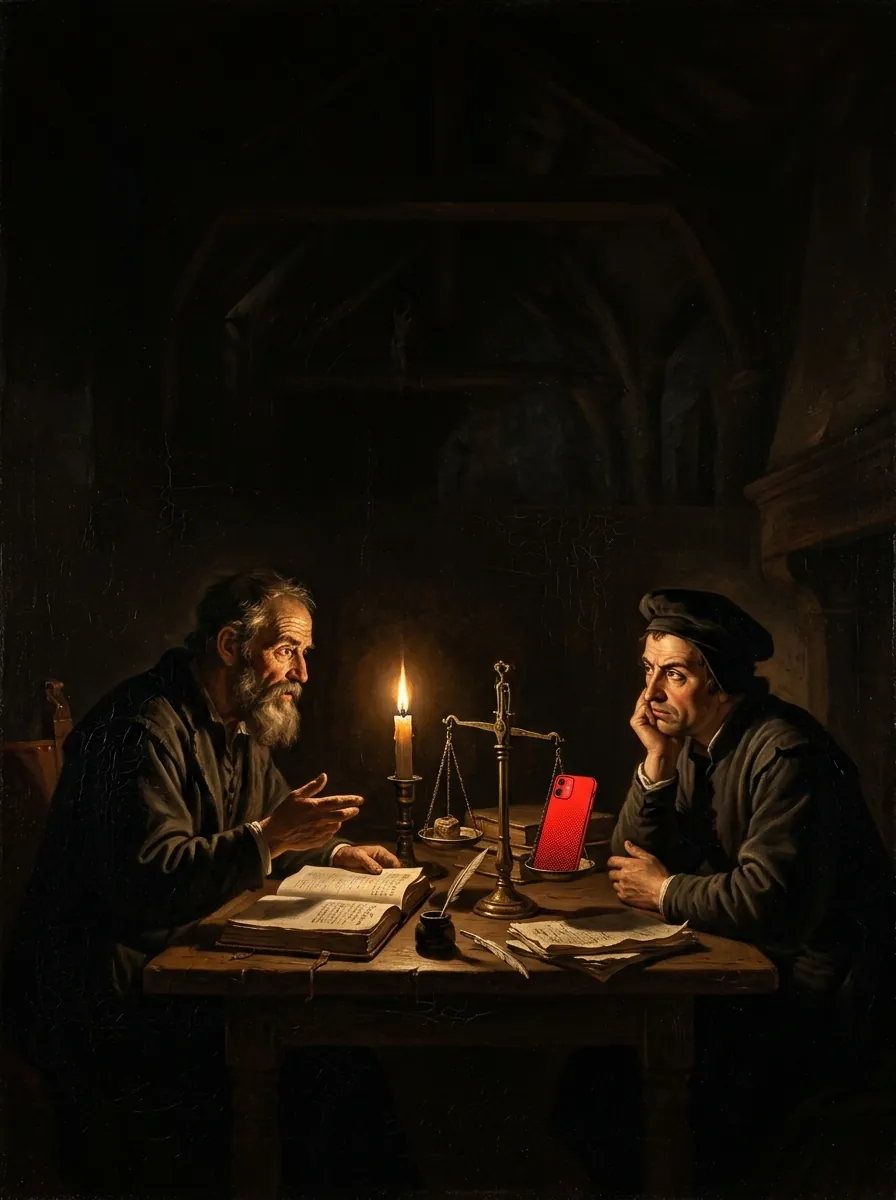
HACKS VITAE ARTWORK (AI-ASSISTED)

Veni, Vidi, Vici · Module 2

Cheat sheet: Think critically

A claim is not the same as its reasons, and evidence comes in different weights. This module covers separating them and asking good questions first.

LessonWhat happensWatch forThe movesThe line to keep
2.1 Can You Learn to Think Critically? Careful thinking can be taught, a little. It seems to work best on what you know. You might feel just as sure in a field you barely know as in one you know well.
  1. What a belief rests on
  2. Where it leads
  3. How well you know the subject
  4. A decision about what to believe or do
Critical thinking asks what a belief rests on, and it seems to work best on things you know well.
2.2 What Makes an Argument Work? Perfect logic can lead somewhere false, and bad logic can land on the truth. The argument only works if something nobody said is true.
  1. The claim
  2. The reasons, said and unsaid
  3. Whether the reasons would lead to the claim
  4. Whether they're true
Two checks, one argument. An argument holds up when its reasons are true and really lead to its claim.
2.3 Is It a Proof, a Pattern or a Good Guess? The surest kind of reasoning never checks the reasons it starts from. A good guess gets talked about as if it were proved.
  1. Which kind of reasoning got there
  2. What each kind can give
  3. What else could explain the same facts
  4. What would you expect to see if the guess were wrong
Deduction can make an ending certain, induction likely, and abduction a fair guess. Knowing which one you're using tells you how sure to be.
2.4 How Can a Shifting Word Break an Argument? One word can quietly change meaning mid-argument, and the argument falls with it. A group gets redefined right after someone names an awkward example.
  1. One word that does a lot of work
  2. Its meaning at the start
  3. Its meaning at the end
  4. A definition that appears only after an awkward example
An argument is only as steady as the words it leans on.
2.5 How Can a Question Test a Belief? Socrates' questions often ended at a dead end. He said he was stuck too. A question can already contain the answer it wants, like "Don't you think that's silly?"
  1. What the person really believes
  2. What else would follow
  3. Where they clash
  4. Whether their view held up
Good questions test a belief by its holder's own answers, and they can be turned on your beliefs too.
2.6 What Makes Some Evidence Stronger? Ice-cream and sunscreen sales rise together. Neither one drives the other. Two things rose together, and the cause was simply assumed.
  1. How was it gathered
  2. What else could explain it
  3. How big, and how many
  4. Has it been repeated
How a finding was gathered shapes how much it can carry, and one striking result rarely settles a question.
2.7 How Sure Should You Be? Feeling certain tells you how you feel; it's no reliable guide to being right. It's a sign of all-or-nothing thinking when new evidence changes either nothing or everything.
  1. A rough sense of the odds
  2. How much it would matter
  3. What would make you less sure
  4. New evidence moving the view
Holding a view as a chance, not a certainty, leaves room for new evidence to move it.
2.8 How Can a Chart Mislead Without a Wrong Number? Every number can be true and the picture still false. A total can look very good while hiding groups that point the other way.
  1. Compared with what?
  2. Where does the scale start?
  3. Does the total hide groups?
  4. How big were the groups?
A chart can be true in every number and still mislead through what it leaves out.
2.9 How Does Propaganda Slip Past Your Reasons? A message can be true and still be propaganda. A label, a symbol or a crowd is doing the job a reason should do.
  1. Who made this?
  2. What do they want you to do?
  3. How accurate is it?
  4. What's been left out?
  5. Does it fit what you already believe?
Propaganda often swaps reasons for feelings, and it seems to land best where you already lean its way.
2.10 Can You Trust What You See Online? You learn most about a website by leaving it. A famous name with no date, book or speech attached is worth a second look.
  1. A pause. Do you know the source?
  2. Finding out who's behind it
  3. Seeing what sources you already know and trust report
  4. Tracing it to where it first appeared
How a post looks says little. Who's behind it, and where it first appeared, says much more.
2.11 What Do Scams and Overblown Claims Have in Common? The payout that seems to prove it works can be part of the trick. Being asked to pay first, or in an odd way like gift cards or crypto, is a warning sign.
  1. What it promises
  2. What it asks of you first
  3. Who, apart from the seller, says it's real
Scams and overblown claims can share a shape. Both lean on a big promise, with proof from the one making it.
2.12 What Draws People to Conspiracy Theories? Conspiracy theories can promise answers, safety and belonging, and may often leave those needs less met. Arguments against the theory get read as more proof of the plot.
  1. Asking what drew them in
  2. Asking for their strongest evidence
  3. Answering that one point
  4. Agreeing where they're right
  5. Leaving time
A theory's pull often comes from the needs it promises to meet. Whether it's true is a question of evidence.

Hacks Vitae · a free course · hacksvitae.com/courses/veni-vidi-vici/think-critically

Visual guide

Swaps to watch for

One example from each lesson: the question that matters, and what can slip in instead.

  1. 2.1

    The question that matters‘This is the top school in town’

    the question underneath is

    What slips in‘Top by what measure?’

  2. 2.2

    The question that matters‘It’s on sale, so it’s a good buy’

    the unsaid reason is

    What slips in‘anything on sale is good value’

  3. 2.3

    The question that matters‘All the ferries stop in winter, and it’s winter, so there’s no ferry’

    that’s

    What slips in‘deduction: only as good as its rule’

  4. 2.4

    The question that matters‘I'll be there soon’

    the word to watch is

    What slips in‘soon’

  5. 2.5

    The question that matters‘Money can't buy happiness’

    a testing question is

    What slips in‘What do you mean by happiness here?’

  6. 2.6

    The question that matters‘Dog owners are happier’

    a question is

    What slips in‘Did dogs cause it, or did happy people choose dogs?’

  7. 2.7

    The question that matters‘It will rain on the picnic’

    a how-likely version is

    What slips in‘Rain looks more likely than not’

  8. 2.8

    The question that matters‘The average salary went up’

    the question underneath is

    What slips in‘Mean or median, and how spread out is the pay?’

Lesson by lesson

Lesson 2.1

Can You Learn to Think Critically?

Careful thinking can be taught, a little. It seems to work best on what you know.

Critical thinking is careful thought about what to believe or do, and what that rests on. Teaching it helps a little, on average, and it seems to work best on subjects you know well. Someone sharp about football tactics may be no sharper about a phone contract. The question worth keeping: 'What does this rest on?'

The idea

  • If a friend says a new study app helps you learn, the careful question is: 'What is that based on?' That question sits at the heart of this lesson. Critical thinking is careful, steady thought about what a belief rests on. It also asks where the belief would lead if it were true. One short definition calls it reasonable, reflective thinking about what to believe or do. People who study it don't fully agree where it stops. For some it ends once you've reached a judgement; others include what you then do about it.
  • Can it be taught? Yes, a little. Studies of classes that set out to teach it find a real but modest gain, on average, not a transformation. Results vary a lot from one study to the next. Classes that taught it both on its own and inside other subjects did better than classes doing only one. But that difference may have been down to chance.
  • What helps? Teaching it goes better when the goal is spelled out than when it's left to happen by itself. Three things stood out: talking it through, real problems and examples, and a mentor. Picture a class arguing over a real news story, with a teacher who keeps asking 'how do you know?' Methods that worked turned up at every level of schooling and in every subject.
  • Here's the catch: the skill may not move easily from one subject to another. Thinking well about something seems to depend heavily on knowing it. A keen gardener can judge a claim about soil, and still be fooled by one about cars. It can carry over, but when and why it does is complicated. One popular idea is to teach it across many subjects, pointing out the skills they share. One philosophy encyclopedia calls the evidence for that 'scanty': there isn't much of it.

Signs it's happening

  • You can say what you believe, but not what it rests on.
  • A claim feels obviously true, and you can't quite say why.
  • You might feel just as sure in a field you barely know as in one you know well.

Four moves

Four moves: What a belief rests on; Where it leads; How well you know the subject; A decision about what to believe or do 1 What a belief rests on 2 Where it leads 3 How well you know the subject 4 A decision about what tobelieve or do

Before and after · A friend says a new app doubles your phone's battery life.

Quick

"Brilliant, I'll share it." The claim gets passed on just as it arrived, with nothing added but speed.

Second look

"Where does that come from, and what would follow if it were true?" That question doesn't call the friend wrong. It just checks the ground first. Asking what a claim rests on comes before passing it on.

Lesson 2.2

What Makes an Argument Work?

Perfect logic can lead somewhere false, and bad logic can land on the truth.

An argument is a claim plus the reasons given for it. Two separate checks follow: do the reasons lead to the claim, and are they true? Say someone tells you, "We'll need a taxi, because the last train has gone." The claim is that you'll need a taxi. The reason given is the train. A second reason goes unsaid: there's no other way home. The question worth keeping: "If these reasons were true, would the claim follow, and are they true?"

The idea

  • "Let's eat early, since the film starts soon." Nobody is shouting, but that's an argument. In everyday talk, "argument" often means a quarrel. In logic, an argument is a claim plus the reasons offered for it. Both parts can be true or false, so both can be checked. Small words help you find them. "Because" and "since" often mark a reason; "so" and "therefore" often mark the claim. They're clues, not rules, because those words do other jobs too: "since Monday" is about time, not a reason. In the film example, the claim ("Let's eat early") comes first, and the reason follows "since".
  • An argument can also lean on a reason nobody says out loud. "He's a pilot, so he won't mind the bumpy flight" rests on an unsaid one: pilots don't mind bumpy flights. Said out loud, that hidden reason can show where the real disagreement is. You might agree with every spoken reason and still doubt the unsaid one. Filling it in the way the speaker would is the fairest reading.
  • Two separate questions sit inside an argument that aims to prove its claim, not just make it likely. First, if the reasons were true, would the claim have to follow? If so, the argument is called valid. Second, are the reasons true? A valid argument with true reasons is called sound. So "valid" doesn't mean the ending is true. "All toasters are made of gold; everything made of gold is a time-travel device; so all toasters are time-travel devices." The steps connect perfectly, but the reasons are false, and so is the ending. It works the other way too: an argument whose steps don't connect can still end on a true claim. Spotting a flaw shows the argument doesn't prove its claim, not that the claim is false.
  • There's a quick test for whether the steps connect: keep the shape, swap the words. "Good leaders are confident; he's confident; so he's a good leader" can sound fair. Swap the words, keeping the shape (good leaders → basketballs, confident → round, he → the Earth): "Basketballs are round; the Earth is round; so the Earth is a basketball". Same shape, true reasons, a false ending, so the shape doesn't work. The test helps because a believable ending pulls hard. In studies of short logic puzzles, people accepted arguments more often when they already believed the ending. That held even when the steps didn't work. This pull is called belief bias.

Signs it's happening

  • You can say what you're meant to believe, but not the reasons for it.
  • The argument only works if something nobody said is true.
  • A string of true facts ends on a claim none of them quite reach.

Four things to look at

Four things to look at: The claim; The reasons, said and unsaid; Whether the reasons would lead to the claim; Whether they're true 1 The claim 2 The reasons, said and unsaid 3 Whether the reasons would leadto the claim 4 Whether they're true

Before and after · A post makes a neat case for something you already believe.

Quick

"Exactly right." It gets a nod, mostly because you already agreed with where it ended.

Second look

"Would these reasons convince me if the ending were one I disliked?" A neat case for something you believe still needs its steps checked.

Lesson 2.3

Is It a Proof, a Pattern or a Good Guess?

The surest kind of reasoning never checks the reasons it starts from.

Philosophers usually name three main kinds of reasoning. Deduction works out what must follow if your reasons are true. Induction goes from what you've seen to what's likely. Abduction (nothing to do with kidnapping) picks the explanation that fits the facts, for now. Say there's a puddle by an open window. "Rain came in" is a good guess, not a proof. The question worth keeping: "Does this have to follow, is it likely, or is it one guess among others?"

The idea

  • "Every train on this line stops at the airport; this train is on this line; so it stops at the airport." That's deduction: a general rule applied to a case, the kind of argument the last lesson checked. If both reasons are true, the ending has to be true. "All my keys are on this ring; this key isn't on it; so it isn't mine" works the same way. Of the three kinds, deduction is the only one where true reasons make the ending certain. But it never checks its own starting points. If the rule is wrong, the neat ending can be wrong too.
  • "This café has always delivered within the hour, so it will tonight." That's induction: going from what you've seen to what you haven't. It makes the ending likely, never certain. A café that's always been on time can still have a bad night. More cases, and fairer ones, make it stronger; a handful makes it weak. A philosopher long ago named the catch: it assumes the future will be like the past. Learning from experience always leaves room for a surprise.
  • Abduction picks the explanation that fits the facts best. That's how the word is most often used today; its coiner used it a little differently, as Go deeper explains. A planet's orbit once strayed from the path that had been predicted. Two astronomers explained it with an unseen planet, and not long after, one was found. Closer to home: two friends of yours had a big fight, and then someone sees them jogging together. You guess they've made up. If you then hear they're old business partners with money to sort out, the guess may not fit any more. Your best explanation is only the top pick of the ones you thought of.
  • The three can work as a team. You guess (abduction), work out what should follow (deduction), then test it (induction). If the test fails, you go back and guess again. The thinker who coined the word "abduction" saw these as three phases of scientific method. He turns up in the story below.

Signs it's happening

  • A good guess gets talked about as if it were proved.
  • A rule drawn from a handful of cases gets applied to everything.
  • Nobody has asked what else could explain the same facts.

Four questions

Four questions: Which kind of reasoning got there; What each kind can give; What else could explain the same facts; What would you expect to see if the guess were wrong 1 Which kind of reasoning gotthere 2 What each kind can give 3 What else could explain thesame facts 4 What would you expect to seeif the guess were wrong

Before and after · The car won't start on a cold morning.

Quick

"The engine's finished." A big repair bill starts to look certain.

Second look

"If it's the battery, a jump start should get it going." If that fails, it's back to guessing. A guess you can test tells you more than one you simply believe.

Lesson 2.4

How Can a Shifting Word Break an Argument?

One word can quietly change meaning mid-argument, and the argument falls with it.

An argument only holds if its key words keep one meaning all the way through. When a word quietly slides from one meaning to another, the reasoning stops supporting its conclusion. If 'fresh' means 'baked today' in one step and 'not stale' in the next, the argument has changed its subject. The question worth keeping: 'Does this word mean the same thing at the end as at the start?'

The idea

  • An argument can go wrong when a word changes meaning halfway through. Here's a joke. Nothing is better than a good holiday, and a cold sandwich is better than nothing. So a cold sandwich beats a good holiday? No: 'nothing' meant two different things. This slip is called equivocation.
  • Here's another. A feather is light. Whatever is light can't be dark. So a feather can't be dark. The first 'light' means not heavy; the second means not dark. Each step sounds fine on its own, which is why the slip is easy to miss. Spotting it means asking what each 'light' means.
  • A second trick changes a definition to dodge an awkward example. Someone says no real fan leaves a match early. Told about a lifelong supporter who left early once, they reply: 'Then he isn't a real fan.' The claim only survives because the meaning of 'real fan' quietly changed. The trick is nicknamed 'no true Scotsman', after a story a philosopher once told. The name sums up the dodge: no true member of the group would do that.
  • A word with two meanings isn't a problem in itself. In logic, 'begging the question' means an argument that assumes the very thing it sets out to show. In everyday talk it's also used to mean 'that raises the question', and one major dictionary lists both. Using the phrase in either sense is fine. With any two-meaning word, trouble starts when an argument switches senses partway.

Signs it's happening

  • A key word means one thing at the start and something else by the end, and nobody says so.
  • A group gets redefined right after someone names an awkward example.
  • The conclusion feels like a magic trick, and you can't see where the meaning slipped.

Where to look

Where to look: One word that does a lot of work; Its meaning at the start; Its meaning at the end; A definition that appears only after an awkward example 1 One word that does a lot ofwork 2 Its meaning at the start 3 Its meaning at the end 4 A definition that appears onlyafter an awkward example

Before and after · Two friends split a pizza. Earlier one said 'fair means equal'. Now they say, 'It's only fair I get more, I'm hungrier.'

Quick

"That's fair, you said so." The word 'fair' got a pass, though it now means something else.

Second look

"Which fair do you mean: equal shares, or by need?" Pinning the word down first shows what the claim says. Then each version can be weighed.

Lesson 2.5

How Can a Question Test a Belief?

Socrates' questions often ended at a dead end. He said he was stuck too.

A question tests a belief by asking what its holder really thinks, then what else would have to be true. It often ends in an honest 'I'm not sure I can defend that'. If a friend insists 'you can't trust anything online', a gentle question can test that. 'What about the online map that got you here?' uses the friend's own experience. The question worth keeping: 'What else would have to be true if this were?'

The idea

  • This kind of questioning is called the Socratic method, after Socrates. We know it mainly from Plato's dialogues: written conversations in which Socrates questions people. It starts with what the other person really believes, and they answer with what they really think. There's no crowd to win over. In this kind of questioning, the person answering decides whether their view held up. Say a friend claims 'everyone is selfish deep down'. A first question might be: 'What would count as an unselfish act?' If they say 'giving to charity', the next might be: 'Even when giving makes the giver feel good?' Each answer shows a bit more of what they mean by 'selfish'.
  • Where does it usually lead? It often ends at a dead end, where the person seems unable to support what they first said. Picture a friend who started out sure, and now says, 'Hmm, I'm not sure I can defend that.' When it happens, the whole conversation tends to stop without a neat answer.
  • It wasn't always aimed at others. Socrates turned it on views he probably held himself, so it likely checked his own beliefs too. In Plato's dialogues, one man says Socrates is like a sea fish that numbs anyone who touches it. Socrates says he puzzles others because he is puzzled himself. Picture a teacher who asks the class a question she can't answer either, and says so. The question becomes something to work on together.
  • Can questions alone prove anything? People who study this disagree. One view says they can only show that someone is confused. Another reading: if a belief kept surviving careful questions, Socrates felt that gave him some grounds to keep it.

Signs it's happening

  • A question can already contain the answer it wants, like "Don't you think that's silly?"
  • The question is asked for the people watching, not for the person in front of you.
  • Listening stops once the hoped-for slip arrives.

Four moves

Four moves: What the person really believes; What else would follow; Where they clash; Whether their view held up 1 What the person reallybelieves 2 What else would follow 3 Where they clash 4 Whether their view held up

Before and after · A friend says, "Cheap things are always a waste of money."

Quick

"That's just snobbery." Now it's a fight about who's right. Both dig in, and the belief is never tested.

Second look

"Always? Is there anything cheap you've been glad you bought?" Maybe they think of a cheap umbrella that lasted years. A question lets a person test their own view.

Lesson 2.6

What Makes Some Evidence Stronger?

Ice-cream and sunscreen sales rise together. Neither one drives the other.

Evidence carries more or less weight depending on how it was gathered. Two things moving together may point to a cause, or a third thing may drive both. In a fair test, letting chance decide who gets what balances hidden differences between the groups, on average. And one striking result rarely settles anything. The question worth keeping: 'How was this found, and what else could explain it?'

The idea

  • Two things moving together isn't proof that one causes the other. In a well-known example, ice-cream and sunscreen sales rise and fall together across a year, because the season drives both. Sometimes the cause could run either way. Many studies linked minimum wages with lower employment. But it could also run backwards. When jobs are scarce, employers can set lower wages, and that may lead to calls for a higher minimum. And search enough pairs of numbers, and some will match purely by chance. Still, moving together is often a good clue. The mistake is jumping to the cause too fast.
  • A fair test lets chance decide who gets what. Say you want to know if a study app raises test scores. Chance puts some students on it and some not, then the groups are compared. Letting chance pick the groups balances their hidden differences, on average. 'On average' means the groups end up alike, not identical. Small differences of the kind chance produces aren't a sign the test was unfair. Just watching students who chose the app is weaker. Keen students might pick it, and also study more.
  • Watching what people already do still has a job. In medicine, it's better at spotting side effects that are rare or show up late. It's also more likely to show what a treatment achieves in everyday care. Its weak spot is judging cause and effect, because the groups may differ in other ways. Picture comparing people who already cycle to work with people who drive. Any difference might come from cycling, or from who chooses to cycle.
  • A small study with a dramatic result deserves more caution, not less. In a small study, even a statistically clear result is less likely to reflect a real effect. And one study rarely settles anything, either way. A failed repeat doesn't sink a finding for good. A successful repeat doesn't make it certain either. When a hundred psychology studies were repeated, nearly all the originals had a statistically clear result. About a third of the repeats did. People still disagree about what that means.

Signs it's happening

  • One striking story is doing the work of a whole study.
  • Two things rose together, and the cause was simply assumed.
  • A single result gets quoted as if it settled the matter.

Four questions

Four questions: How was it gathered; What else could explain it; How big, and how many; Has it been repeated 1 How was it gathered 2 What else could explain it 3 How big, and how many 4 Has it been repeated

Before and after · A headline says children who play chess get better grades.

Quick

"Right, chess makes kids smarter." The link becomes a cause in one step, and the next headline repeats it.

Second look

"Did chance decide who played, or did keen kids pick chess? What else could explain both?" A school with a chess club might also have smaller classes. A link in a headline is a question, not yet a cause.

Lesson 2.7

How Sure Should You Be?

Feeling certain tells you how you feel; it's no reliable guide to being right.

Few things are certain, so it helps to think in chances rather than a flat yes or no. Then each new piece of evidence can move that up or down. Say a friend who's usually on time is late. At first you're fairly sure they're coming; as time passes, less so. The question worth keeping: 'How sure am I, and what would change that?'

The idea

  • Feeling sure and being right are different things. How sure you feel is no reliable guide to whether you're right. A hunch is worth more where things follow patterns you've had a real chance to learn. Elsewhere, it can feel just as strong and be far less reliable. A chess player's quick read of a familiar position is one thing; a hunch about a stranger is another.
  • Forecasting is something people can get better at. In a big contest about world events, three things went with better forecasts: training, working in teams, and tracking. Tracking meant picking out the top forecasters and putting them together, year after year. The training included asking how often similar things had happened before. A forecast like 'probably yes' can be checked once the event happens; 'who knows' can't.
  • Changing your mind starts with accepting you might be wrong. Some short exercises made people more open to that, for a while. One was picturing a situation the way a distant observer would see it. Most of these studies were small or medium-sized, and few have been repeated; the observer one has been. It isn't the same as having no views; it's holding them a little more loosely.
  • Chances are only half of a choice. The other half is how much each outcome would matter to you. An umbrella on a cloudy day is the everyday version: rain may be unlikely, but getting soaked would matter. And what matters isn't the same as money. An old argument says each extra amount of money means less, the more you already have. People still argue over whether you should always weigh choices this way.

Signs it's happening

  • Your predictions come out as 'definitely' or 'no chance', with little in between.
  • It's a sign of all-or-nothing thinking when new evidence changes either nothing or everything.
  • You can't say what would make you less sure, even when asked.

Four parts

Four parts: A rough sense of the odds; How much it would matter; What would make you less sure; New evidence moving the view 1 A rough sense of the odds 2 How much it would matter 3 What would make you less sure 4 New evidence moving the view

Before and after · A new café opens nearby, and the first review you read is glowing, from someone you don't know.

Quick

"This place is great." One review from a stranger, and you're already certain.

Second look

"It sounds promising." Each new review can move your view up or down a little. A string of good ones turns it up; a few bad ones turn it down.

Lesson 2.8

How Can a Chart Mislead Without a Wrong Number?

Every number can be true and the picture still false.

Charts and figures often mislead through what they leave out or how they're drawn, not through false numbers. A missing starting point, a cut-off scale or a hidden group can turn true figures into a wrong impression. A rise 'doubled' sounds big until you see it went from two to four. The question worth keeping: 'Compared with what, and what's been left out?'

The idea

  • A big percentage can sit on a tiny starting number. A rise from two to four can be called 'doubled' or 'up a hundred percent'. It's still only two more. A percentage change means little until you know the starting number. Percentage points are something else again: the plain difference between two percentages.
  • A bar's length is read as its size. When the bars don't start at zero, small gaps look large. Picture two values, fifty and fifty-five. Start the scale at forty-five, and one bar looks twice as tall as the other. A gap of a tenth ends up looking like double.
  • A total can point one way while the groups inside it point the other. At one university, men were admitted at a higher rate overall. Department by department, most showed no clear difference. Added up with each department taken into account, they showed a small edge for women. Among the biggest departments, most women had applied to the ones that took the smallest share of applicants. So the overall gap came mostly from where people applied, not from how each department treated them.
  • Small groups swing to extremes, both ways. With only a few pupils, one or two very strong or weak ones can move the average a lot. Ranked by reading scores, small schools turned up more often than you'd expect at both the top and the bottom. A 'best' or 'worst' ranking says little until you know how big the groups are.

Signs it's happening

  • A percentage change comes with no starting number, so you can't tell if it's big.
  • The bars look dramatic, but the scale doesn't start at zero, so the gaps look bigger than they are.
  • A total can look very good while hiding groups that point the other way.

Four questions

Four questions: Compared with what?; Where does the scale start?; Does the total hide groups?; How big were the groups? 1 Compared with what? 2 Where does the scale start? 3 Does the total hide groups? 4 How big were the groups?

Before and after · A chart in the local news shows your town's bus fares towering over the next town's.

Quick

"Our fares are twice theirs!" The bar looks twice as tall, so the gap feels huge.

Second look

"Where does the scale start?" A scale that starts high can make a small gap look huge. Read from zero, the fares may be only a little apart.

Lesson 2.9

How Does Propaganda Slip Past Your Reasons?

A message can be true and still be propaganda.

Propaganda often works through a feeling, not a reason: a nasty label, a shining word, the sense everyone's doing it. It can even use only true facts and quietly leave out the rest. Say a film poster prints the single kind line from a lukewarm review. Propaganda also seems to land best where people already lean its way. The question worth keeping: 'What does this want me to feel, and what's been left out?'

The idea

  • A school notice giving the date of a fair simply informs. A flyer turning parents against another school, using only the facts that suit it, is something else. That's closer to propaganda: a message someone plans and aims at a whole group, to get the reaction they're after. It doesn't have to lie. A message can be accurate and still be propaganda. In early use, the word named a church office for spreading the faith, and only later turned negative.
  • Its common tricks were named long ago, to help the public spot them. Most of these tricks swap the evidence for a feeling. A nasty label or a shining word like 'freedom' or 'fairness' can stand in for a reason. So can a flag beside a logo, a famous face, or the claim that everybody's doing it. The people who named them weren't saying feelings are bad, only that a feeling isn't a reason. They judged one the hardest to spot. Called card stacking, it simply leaves out the facts that don't help.
  • In lab tests, hearing a claim again made it feel truer, even when it was false and people knew better. Most of those tests used trivia statements in a single sitting. A slogan heard again and again can start to sound like plain common sense. There's a second pattern, too. Propaganda seems to land best where people already lean its way. In one country's past, radio stirring hatred of a group worked best where that hatred had long been strong. It backfired where it had long been weak. How much it changes minds isn't settled.
  • Learning to name a trick ahead of time, sometimes called prebunking, helps people spot it in tests. In one large set of tests, a few short videos about the tricks did just that. Those tests mainly measured whether people could recognise a trick. Out on a real video site, the effect was smaller. Older tests of these advance warnings found the effect starting to fade after a couple of weeks. Whether the effect holds up while people scroll a busy feed full of real posts hasn't been shown. It's a bit like learning a pickpocket's moves at a talk. Spotting them on a crowded train may be harder.

Signs it's happening

  • A strong feeling shows up before any reason does.
  • A label, a symbol or a crowd is doing the job a reason should do.
  • A line feels true, but you can't say where you first heard it.

Questions behind the tricks

Questions behind the tricks: Who made this?; What do they want you to do?; How accurate is it?; What's been left out?; Does it fit what you already believe? 1 Who made this? 2 What do they want you to do? 3 How accurate is it? 4 What's been left out? 5 Does it fit what you alreadybelieve?

Before and after · A sports-drink poster shows a famous runner beside the words "Champions choose it."

Quick

"If she drinks it, it must be good." Her fame did the persuading.

Second look

"Does she know more about drinks than I do, or is her fame doing the work?" A famous person's word counts as a reason mainly when they know the subject.

Lesson 2.10

Can You Trust What You See Online?

You learn most about a website by leaving it.

How something looks online says little about whether it's true. Logos, confident wording and even a familiar voice can be faked. Who's behind it, what others report and where it first appeared tell you more. Say an unknown site shows an official-looking crest. Other sites can tell you who runs it. The question worth keeping: 'Who's behind this, and where did it first appear?'

The idea

  • A website can look official and still mislead. Logos and web addresses are easy to fake. In one study, history experts and students who mostly stayed on the page were often fooled by them. An official-looking logo or web address is just the kind of feature that took them in. Professional fact-checkers learned most about a site by leaving it. They opened new tabs to see what others said about who runs it.
  • Checking a false story by searching for it can backfire. When people searched online to check false stories, they became more likely to rate them as true. Searching a false story's own headline turned up unreliable sites far more often than other searches did. Pasting in the headline of a startling story about a famous person is exactly that kind of search. So the four quick moves below search for the topic in new words, on sources you already know.
  • AI chatbots sometimes guess when they're unsure. A guess can look just like a real reference, with an author, a title, a journal and a year. In tests of earlier chatbots, many of the references they produced turned out not to exist. Newer ones may differ, so a reference still needs checking. A reference from a chatbot is a lead to check, not a source.
  • Voices and video can be faked as well. Criminals make short fake audio clips of a loved one's voice, posing as a relative in a crisis. Such fakes are often hard to spot, so official advice leans on checks instead. Calling back on a number you already have is one. A secret word agreed with your family, to check it's really them, is another. Fake live video calls from a 'boss' or other authority figure are another form these fakes take.

Signs it's happening

  • You can't tell who made it, or who runs the account that shared it.
  • A famous name with no date, book or speech attached is worth a second look.
  • A call or message from someone you know asks for money, and fast.

Four quick moves

Four quick moves: A pause. Do you know the source?; Finding out who's behind it; Seeing what sources you already know and trust report; Tracing it to where it first appeared 1 A pause. Do you know thesource? 2 Finding out who's behind it 3 Seeing what sources youalready know and trust report 4 Tracing it to where it firstappeared

Before and after · A friend shares a stirring line credited to a famous scientist. It sits on a neat quote card with her photo.

Quick

"That sounds just like her." It gets shared again, name and all.

Second look

"Where and when did she say it?" No book, speech or date turns up. Without an original, there's no sign the scientist ever said it.

Lesson 2.11

What Do Scams and Overblown Claims Have in Common?

The payout that seems to prove it works can be part of the trick.

Scams and overblown claims can share a shape: a big promise, backed by proof from the one making it. Scams often add pressure to hurry and a request to pay first. The proof can be part of the trick, like a screenshot of earnings or a small first payout. Say a chat group shares members' earnings, then offers a paid 'premium' tier. Earnings as proof, then a fee to pay: the US Federal Trade Commission's guides flag both. The question worth keeping: 'What does this ask of me first, and who besides the seller says it's real?'

The idea

  • In many scams about jobs and extra work on the side, money or a login goes from you to them. It happens before you get the pay you were promised. Consumer guides in the US, Australia and Canada call a fee to get work a warning sign. Whatever the fee is called, it's the same sign. A 'joining fee' for a private earnings group is one example. Paid 'training' before you start, or a starter kit you have to buy, are others. The US Federal Trade Commission puts it simply. Honest employers never ask you to pay to get a job.
  • Promises of high, sure returns with little or no risk are classic warning signs of fraud. That's how US investor regulators put it. Some 'AI trading bot' schemes claimed every trade would 'win'. In one bot case a US regulator describes, very little money was traded at all. That bot promised a set minimum return each month, plus pay for bringing in friends. It ran as a Ponzi scheme, paying earlier investors with newer investors' money, like the story below.
  • A screenshot of earnings, a growing balance or a small first payment doesn't show you'll be paid. Task scammers, who offer pay for simple clicks online, may pay you a little at first, to win your trust. And success stories might not be true, or typical. The US Federal Trade Commission describes the next step. After the small payment, you're asked to deposit your own money to unlock more tasks.
  • Health headlines can say more than the study behind them. Press releases are the announcements universities send to reporters. In a look at UK university releases on health research, when a release exaggerated, the news often did too. A small finding called a breakthrough in a release can reach the news as a breakthrough. The study itself shows what was found. Journals ask authors to say who paid for the work. Knowing who paid is a reason to read closely, not proof the study is wrong.

Signs it's happening

  • Being asked to pay first, or in an odd way like gift cards or crypto, is a warning sign.
  • There's a push to decide now, before the offer 'disappears'.
  • The proof is a screenshot, a balance or a story you can't check.

Three questions

Three questions: What it promises; What it asks of you first; Who, apart from the seller, says it's real 1 What it promises 2 What it asks of you first 3 Who, apart from the seller,says it's real

Before and after · An app shows your 'AI trading' account growing fast. Taking money out needs a fee first.

Quick

"It's working! The fee is worth it." More money goes in, and the balance keeps climbing on screen.

Second look

"Why would my own money cost a fee to take out?" A balance you can't withdraw is a warning sign Canada's Anti-Fraud Centre names.

Lesson 2.12

What Draws People to Conspiracy Theories?

Conspiracy theories can promise answers, safety and belonging, and may often leave those needs less met.

Conspiracy theories can draw people in by promising to meet real needs. People want to make sense of events, to feel safe, and to belong. Studies so far suggest the theories often leave people's needs less met. Some conspiracies were real, so the useful question is the evidence for each one. Say a friend is sure the referee was paid to make their team lose. 'How can you believe that?' skips what the story offers them. The question worth keeping: 'What does this story offer them, and what's the evidence for this one?'

The idea

  • After a frightening event, 'someone planned this' can feel steadier than 'nobody knows why'. That's the shape of a conspiracy theory: a story that puts an event down to powerful people plotting in secret. Conspiracy theories can draw people in by promising to meet real needs. One is wanting to understand: a huge, confusing event can seem to call for a huge, hidden cause. Another is wanting safety and a sense of control. A third is belonging, and thinking well of yourself and your group. Many of these stories are also hard to prove wrong. They claim the plotters cover their tracks, so anyone arguing against the story can look like part of the plot.
  • In US surveys, belief in at least one of these theories was common. So this pull isn't something that only happens to other people. The patterns researchers found describe averages; they are not labels for anyone. Feeling excluded, or wanting to stand out as unique, has been linked to stronger belief. So has feeling anxious or powerless, though it's not settled that these feelings cause the belief. Suspicion can also come from experience. Some communities learn to mistrust those in power because those particular people couldn't be trusted. If an official body once misled someone's family, that person may meet the next official statement with more suspicion.
  • Studies so far suggest these theories often leave people's needs less met, not more. Reading them tends to lower people's sense of control. In tests, they also lowered trust in government bodies, even ones the story wasn't about. And a story can change your view while you hardly notice the change. Most of these tests, though, used students and people signed up to answer surveys. They weren't especially disadvantaged or under threat. For people already on the edges of society, the theories may offer some comfort.
  • In studies, most one-off efforts to change these beliefs shifted them only slightly or not at all. Warnings given before someone meets a theory, sometimes called prebunking, did better, though only short-term effects were measured. A months-long university course on telling real science from things that only look scientific also did well. In a large study, patient chatbot conversations built around the person's own evidence brought belief down. It was still lower two months later. That study didn't test the same talk between friends or family. The journal later raised a concern about the study and published a correction. The concern is now listed as withdrawn, and the authors' corrected figures showed much the same fall.

Signs it's happening

  • Arguments against the theory get read as more proof of the plot.
  • It turns a big, frightening event into a story with a clear villain.
  • Believing it comes with company, and a sense of being let in on a secret.

One way a talk might go (our untested suggestion)

One way a talk might go (our untested suggestion): Asking what drew them in; Asking for their strongest evidence; Answering that one point; Agreeing where they're right; Leaving time 1 Asking what drew them in 2 Asking for their strongestevidence 3 Answering that one point 4 Agreeing where they're right 5 Leaving time

Before and after · A friend sends you a video and says it proves a cover-up.

Quick

"How can you fall for this? It's ridiculous." The talk ends before their reason is heard.

Second look

"Which part convinced you most?" Asking which part convinced them turns the talk to one piece of evidence you can look at together.

Where the lessons come from

Each lesson is drawn from articles in the library, where the research, names, dates and sources are set out in full.

Pictures: HACKS VITAE ARTWORK (AI-ASSISTED) · Drawings: Hacks Vitae